


PSD Task: Behavioral Interruption
$15
Buy Now, Pay Later
Pay in 4 interest-free payments.
Choose  Pay Later at checkout. Learn more.
Psychiatric Service Dog Tasks: Behavioral Interruption
Teach your dog a psychiatric service dog task that helps interrupt distress behaviors
Behavioral Interruption teaches your dog to interrupt a specific behavior or pattern connected to anxiety, panic, PTSD symptoms, dissociation, freezing, repetitive movement, or emotional overwhelm. A study on PTSD service dogs found that trained tasks for calming and interrupting anxiety were among the most important and frequently used tasks reported by veterans with PTSD
This course walks you through the steps to choose the behavior to interrupt, teach a safe interruption response, build consistency, add a clear cue, and practice calm follow-through.
Problems You’ll Solve
- Handler needs a clear, repeatable task for anxiety, panic, dissociation, PTSD symptoms, freezing, repetitive behaviors, or emotional overwhelm
- Dog does not know how to interrupt a behavior safely
- Dog gets too excited, pushy, loud, or physical during the task
- Dog interrupts the wrong behavior or responds inconsistently
- Dog stops after one interruption when more support is needed
- Dog does not understand when the task starts or ends
What You’ll Learn
- Behavior Selection: Choose one clear behavior or pattern for your dog to interrupt.
- Interruption Response: Teach a safe response, such as a nose nudge, paw tap, chin rest, gentle lick, lean, or light body block.
- Cue Word: Add a clear cue such as “interrupt,” “check,” “help,” “nudge,” or “enough.”
- Calm Contact: Reward controlled interruption without jumping, barking, scratching, mouthing, or pushing too hard.
- Follow-Through: Build from one interruption to repeated support, staying close, or redirecting when needed.
- Release Cue: Teach your dog when to stop the task and settle calmly.
- Real-Life Practice: Build reliability in different rooms, settings, and mild distractions.
Why This Course?
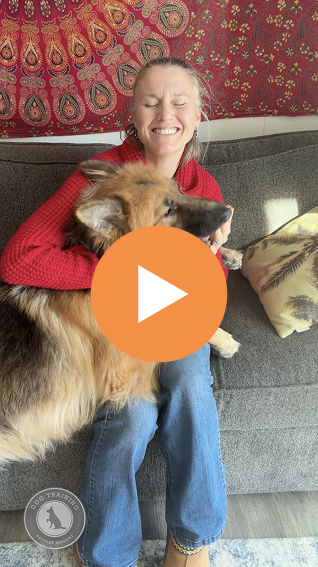
- Clear step-by-step lesson format with a companion demonstration video you can use at home
- Includes breed-specific training tips for Golden Retrievers, Labrador Retrievers, German Shepherds, Poodles, Boxers, and Corgis
- Designed to support handlers working on psychiatric service dog skills
- Focused on one practical psychiatric service dog task
- Gentle, positive training methods
- Helps build a calm, repeatable interruption and redirection behavior
- Includes safety reminders for handler comfort and dog stress signals
Great For:
- Handlers who experience anxiety, panic, dissociation, PTSD symptoms, freezing, repetitive behaviors, sensory overload, or emotional overwhelm
- Dogs older than ~16 weeks
- Dogs who are comfortable with handler interaction and gentle contact
- Dogs learning interruption, redirection, grounding, and calming support work
- Teams who already have basic obedience skills and are ready for task training
What You’ll Get
- Access to this online training course and video lesson for 1 year
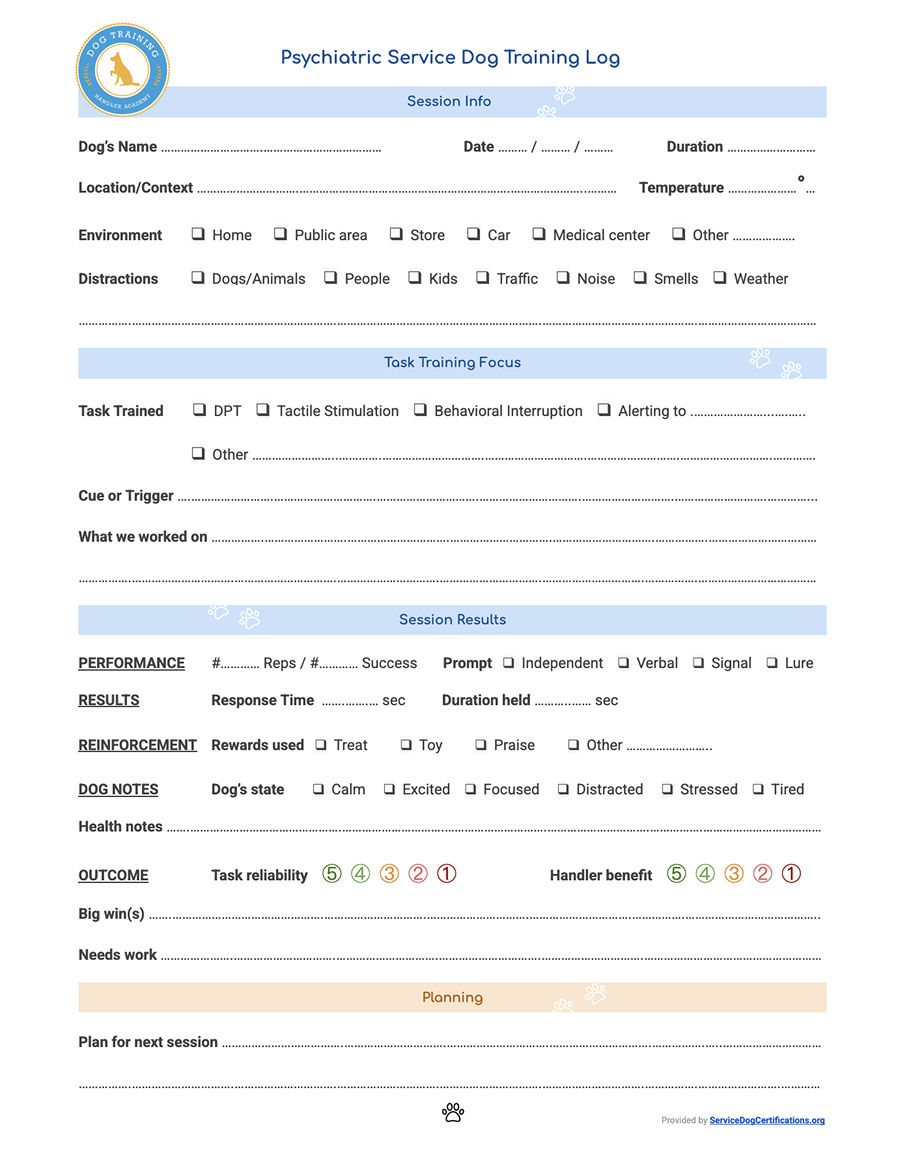
- Downloadable Training Log PDF
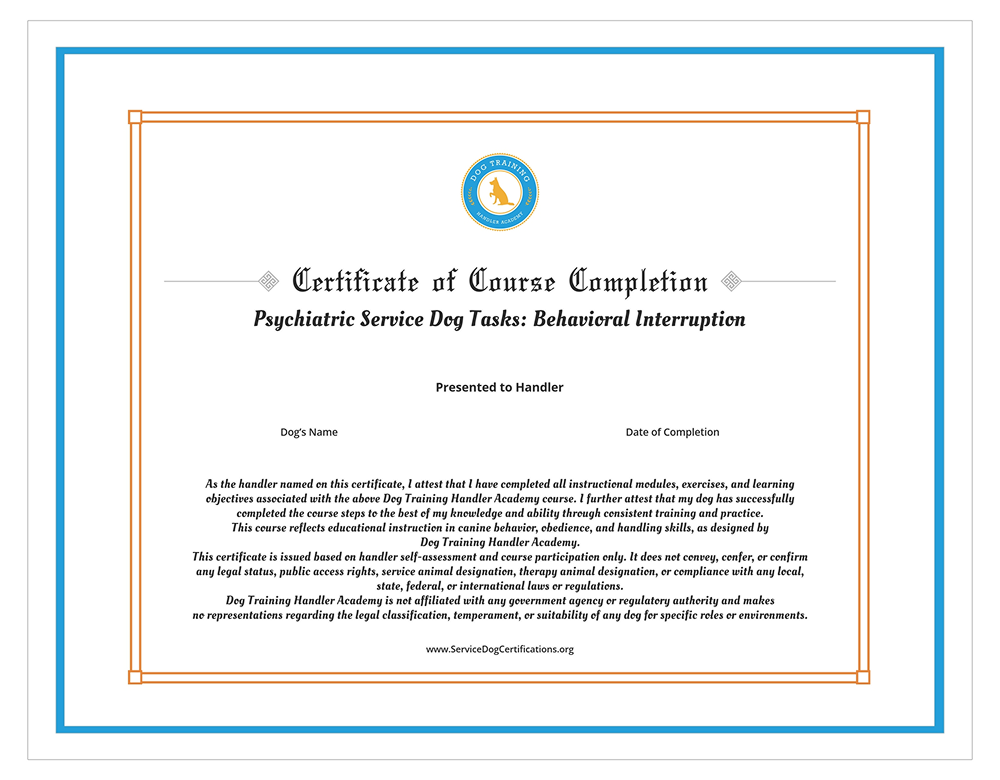
- Custom digital training course completion certificate emailed to you at completion of the course
