


Emotional Support Dog Requirements



Ready to make your dog or pet an emotional support animal? We’re here to remove the confusion from the process so you can learn what is legally required to make your pet an official ESA in just a few easy steps!
In this article:
- Emotional Support Dog Document Requirements
- Emotional Support Dog Training Requirements
- Emotional Support Dog ID Card and Registration Requirements
- FAQ about Emotional Support Dog Requirements
Emotional Support Dog Document Requirements
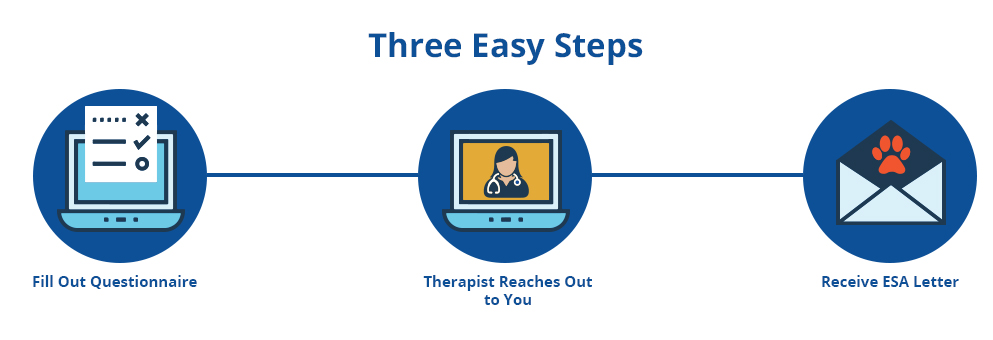
Under Federal Law in order to legally call your dog an emotional support animal you need to first obtain an ESA letter. The most important person in this process is a mental health professional — someone like a therapist or counselor who understands how your animal helps your mental health and supports your wellbeing.
According to HUD guidelines, to be valid your letter is required to contain basic information like your mental health professional’s signature, license number, and contact information. In the letter, your provider will explain that you deal with a mental health condition and that your emotional support animal is part of how you manage it. The letter also needs the date, since these letters are like milk — they have an expiration date. Usually, you’ll need a new one each year.
So why is this letter required at all? It’s because, under ESA laws, you need to share one with your landlord if you want to live with your emotional support dog in “no pets” housing. You also need an ESA letter if you’re requesting a waiver of pet fees and deposits. An ESA letter is the only document your landlord can ask for as proof of your dog’s ESA status, making it an important document to get as early as possible in the process.
Emotional Support Dog Training Requirements
ESAs don’t require special training, they serve their purpose simply by being themselves — through their natural ability to provide comfort, companionship, and emotional stability to their owners. Your ESA might naturally help reduce your anxiety just by hanging out with you or giving you a reason to get up in the morning, but they don’t need special training to do this. It’s their presence and the bond you share that provides the therapeutic benefit.
Psychiatric service dogs, on the other hand, work in a fundamentally different way under the Americans with Disabilities Act (ADA). These dogs must undergo specialized training to perform tasks that directly help with their handler’s disability. For example, a service dog might be trained to detect oncoming seizures or perform deep pressure therapy for panic attacks.
An emotional support dog might naturally lie next to their owner during an anxiety attack, providing emotional comfort through their calming presence. In contrast, a psychiatric service dog would be specifically trained to recognize signs of an impending anxiety attack and perform specific actions like creating space around their handler in crowded areas or leading them to a quiet place — actions that require extensive training to perfect.
While ESAs do not need any specialized training, they should still be well-behaved and under control at all times. A landlord can kick out an emotional support dog if it is acting in an unsafe or destructive manner.
Emotional Support Dog ID Card and Registration Requirements
The legal requirements for ESA registration are straightforward: you do not need to register your emotional support dog anywhere. There are no federal or state agencies that require registration. You also do not need any type of special ID card to prove you have an ESA. You can, however, still choose to register your emotional support animal with us and get accessories, like a linked ID card and tags.
You may wonder why ESA owners register their ESAs and get ID cards even if they don’t have to. There are practical reasons for doing it: these visual markers can help smooth daily interactions, especially in places that typically have “no pets allowed” policies like your building lobby. They notify staff and other tenants that a legally protected assistance animal accompanies you. However, remember that your landlord can insist on seeing your ESA letter, but not any other form of documentation.
Frequently Asked Questions about Emotional Support Dog Requirements
1. Does my health condition meet the requirements for an emotional support dog?
You can qualify for an emotional support dog if you have an emotional or mental illness(es) that can be considered a disability, which means that your condition is so severe that it significantly limits your ability to do everyday tasks. These are some common conditions that healthcare professionals write ESA letters for:
- Attention deficit disorder (ADD)
- Learning disorders
- Autism
- Generalized anxiety disorder (GAD)
- Gender dysphoria
- Bipolar disorder
- Cognitive disorders
- Depression
- Severe anxiety
- Post-traumatic stress disorder (PTSD)
Your therapist, doctor, or social worker can evaluate your condition and then decide whether it’s appropriate to recommend an emotional support dog.

2. Are there breed or weight requirements for emotional support dogs?
There are no height, breed, or weight requirements for emotional support animals, including dogs, and landlords, HOAs, co-ops, and other housing providers cannot discriminate based on these traits. This rule even protects breeds that are commonly discriminated against, such as Pit Bulls or Dobermans. You can even have more than one emotional support animal if your therapist recommends it.
There is a requirement, however, that your dog does not pose any sort of health or safety threat to other tenants and can comfortably be in your living space.
3. What are the requirements to fly with an emotional support dog?
Unfortunately, due to the latest Air Carrier Access Act regulations, emotional support dogs no longer have flying privileges in the U.S. That means your emotional support dog will be treated as a normal pet and subject to your airline’s pet policies and pet fees. However, you can still fly with a service dog and board the cabin free of charge.
Emotional Support Dogs Work
If you believe you or a loved one may benefit from an ESD, don’t hesitate to make an appointment with your mental health professional to start the process.
If you do not have access to a healthcare professional or are intimidated by the idea of reaching out for help, consider using an online service to get your ESA letter. ESA rules specifically allow for remote online providers to write ESA letters, so your letter will be just as valid as one obtained in person.
About the Author: The writing team at Service Dog Certifications is made up of folks who really know their stuff when it comes to disability laws and assistance animals. Many of our writers and editors have service dogs themselves and share insights from their own experiences. All of us have a passion for disability rights and animals.
Related Articles
Emotional Support Animal Laws
If you live in any state in the U.S. the Fair Housing Act is a federal law (meaning it applies across the country) that guards your rights as the owner of an emotional support animal. Your state might even have its own laws for extra protection. This guide will explain current laws and how they […]

Read More

Service Dog Requirements
If you want to make your dog a Service Dog, your first step is to educate yourself on Service Dog Requirements. The ADA defines a Service Animal as a dog individually trained to perform tasks or do work for the benefit of a person with a disability. A disability can be a physical impairment, but […]
Read More

What to Do if Your Landlord Does Not Accept Your Emotional Support Animal
If your landlord has said no to your emotional support animal, there’s no need to panic; HUD’s rules are on your side. In this article we’ll let you know what you need to do and provide templates for you to smooth communications with your landlord. In this article: Keep in mind that most but not […]
Read More