


How Much Should I Exercise My Service Dog?


Like any dog, a service dog needs exercise. While their work to support you involves a certain amount of physical activity, there’s a good chance it’s not enough to keep your dog healthy. The amount and type of exercise needed will depend on your dog’s breed and age. Fortunately, there is a wide range of exercise options available — so whether you’re physically active or disabled, you should have no trouble keeping your service dog in good physical shape.
In this article:
- Age, breed, and exercise needs
- Getting outside with your service dog
- Exercising body and mind
- Exercising your dog when you’re mobility is impaired
- Final word
Age, Breed, and Exercise Needs
Puppies need to move a lot — but, like most young animals, they can only go so far so fast before they run out of steam and need a nap. As they mature, most dogs need at least half an hour to an hour a day of exercise. Older dogs may develop a range of issues, from arthritis to hip dysplasia, that can make physical exercise more difficult.
Certain breeds need more exercise than others. Service dogs, because they are often bigger and stronger breeds, may need more exercise than the average pet dog. Working and sporting breeds, including German Shepherds and Labradors, often need at least at least an hour of moderate-intensity exercise daily to stay healthy and happy. While we usually think of canine exercise as “walking the dog,” walking and hiking are by no means the only way to give your service dog a good workout.
Getting Outside With Your Service Dog
Like all dogs, service dogs enjoy walking, hiking, and running. If you are physically able and the weather permits, it’s always a good idea to get outside and enjoy time with your service dog. Some options include:
- Hiking and Walking
Whether you’re walking around the neighborhood or exploring a woodland trail, your service dog will enjoy the outing. - Biking and Skating
If your dog enjoys a real run, you may want to bring them along when you ride your bike, rollerblade, or inline skate. Be sure the area is safe, and that your dog knows how to stay out of the way of your wheels (and other pedestrians and bikers). - Swimming
If your dog likes swimming and you have a clean body of water nearby, you can take him swimming. You may choose to jump in too — or just throw a ball for him or her to fetch. - Pulling
If your service dog is large and strong, he or she may enjoy pulling a dog sled, cart, or wagon.
Getting their owners outside is actually one reason psychiatric service dogs are so helpful for their owners. In addition to their trained task, PSDs give their owners a reason to get out of bed and establish good routines.
Exercising Body and Mind
Unlike pet dogs, service dogs are highly trained — and exercise regimens can be a great way to continue and reinforce your dog’s training. Avoid activities that may reinforce negative behaviors such as jumping up or lunging for food. Instead, try some of these options.
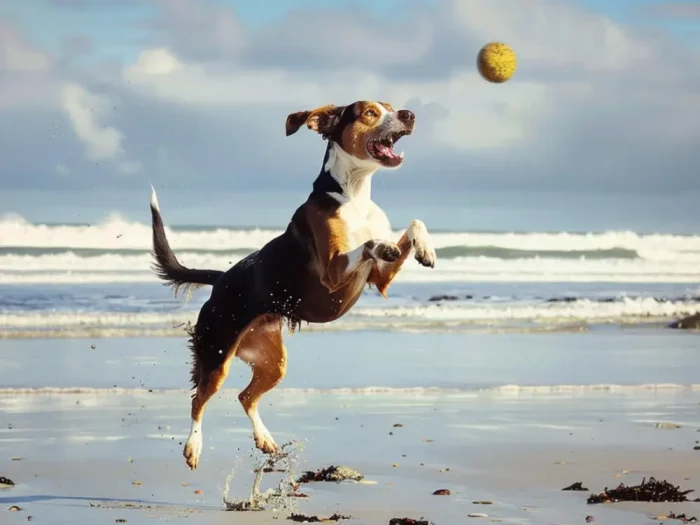
- Ball games like fetch and catch can be fun for you and your dog. They also offer a nice opportunity to reinforce obedience.
- Destruction boxes that allow your dog to tear the box apart for a treat. This game also gives your dog a chance to exercise his curious mind.
- Confidence and agility courses take some work to set up and manage, but they are a terrific way to get your dog moving in all directions while building thinking and obedience skills.
- Obedience drills of all sorts, ranging from “heel” and “sit” to handling your daily needs, are important and are a good way to keep your dog moving.
Exercising Your Dog When You’re Mobility is Impaired
For many service dog owners, walking and hiking aren’t options — but that doesn’t mean you can’t help your dog get the exercise they need. You may, however, benefit from some technologies designed for disabled animal owners.
- Purchase a dog-friendly treadmill (an investment, but worth it if you intend to exercise your dog indoors most of the time)
- Use a ball launcher for fetch (you can even train your dog to use the machine on their own!)
- Train your dog to jump through hand-held hoops (hula hoops are ideal)
- Play tug of war with a strong knotted rope
Some service dog owners hire dog walkers, and this can be a good solution for your dog’s needs. If you do, be sure you’ve properly “vetted” the dog walker to be sure they understand how to work with a service dog. They should come with strong recommendations and, ideally, have time to bond with your dog before taking them out.
Final Word
Every service dog needs exercise, though the amount and type will depend on the breed and age of the dog. Ideally, you’ll be able to engage with your dog as he exercises. Walking, running, or biking outside is ideal, but there are many options for disabled service dog owners as well. If you will be indoors and immobile most of the time, you may want to consider investing in a dog-friendly treadmill. In addition, games like fetch and tug of war or even feeding puzzles may help keep your dog healthy and alert.
About the Author: Lisa Jo Rudy, M.Div. has been writing on developmental disabilities and mental health since the early 2000s, when her son was diagnosed with autism. Lisa lives on Cape Cod, where she is the proud "mom" of two beautiful cats.
Related Articles
How Much Does It Cost to Train a Service Dog
Training a service dog doesn’t have to break the bank! The cost ranges from free (yes, free!) to $50,000, depending on whether you choose self-training ($0 to $7,000), a hybrid approach with professional guidance ($7,000–$15,000), or full professional training ($15,000–$50,000). The price also varies based on your particular disability and the service dog tasks you […]

Read More
How to Train a Service Dog for Anxiety – 6 Important Steps
We’ve probably all seen a service dog helping to guide a person that is physically challenged but did you know you can also have a service dog if you suffer from anxiety? Dogs can be especially helpful to those that suffer from any number of mental or emotional issues such as PTSD or social anxiety. […]
Read More
How to Make My Dog a Service Dog
The process of making your dog a service dog is easy if you have a qualifying disability and can be done in five steps. The hardest step in the process is the third one — training — and often the most time-consuming. The good news is you have options along the way for each and […]
Read More