


German Shepherd Dog: A Breed Overview
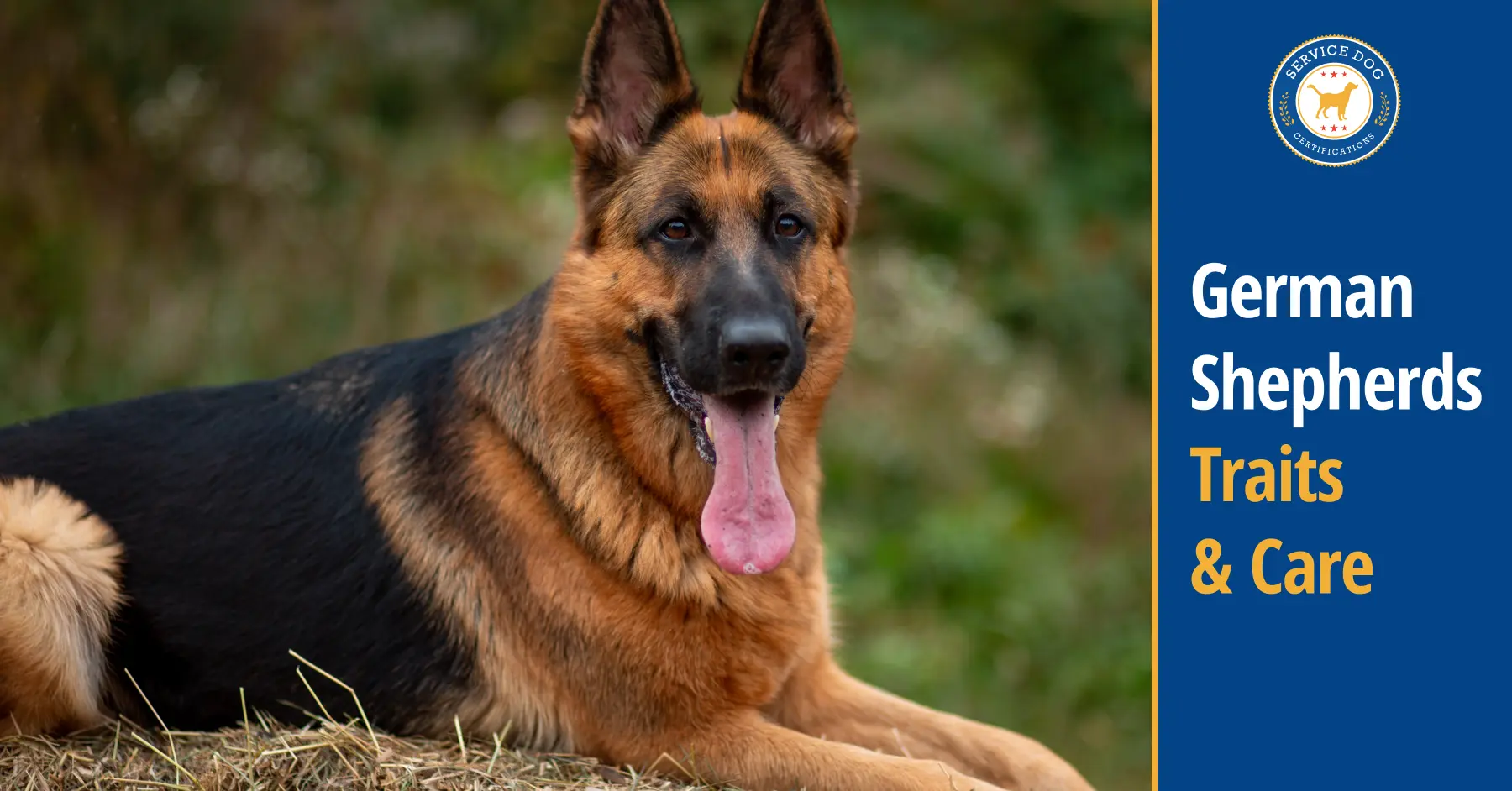

The German Shepherd is one of the world’s most recognizable and versatile dog breeds. Originally developed in Germany as a herding dog, the breed has since become synonymous with fierce intelligence, loyalty, and working ability. Today, German Shepherds are widely used in police and military roles, but they can also make deeply devoted family companions.
However, this is not a low-maintenance breed. German Shepherds thrive best in a suitable home with experienced, engaged owners who can meet both their physical and mental needs.
In this article:
- Temperament and personality
- Size and weight
- Lifespan and health issues
- Grooming and shedding
- Training and intelligence
- Pros and cons of ownership
- Best environment
Share this image on your site
Temperament and Personality
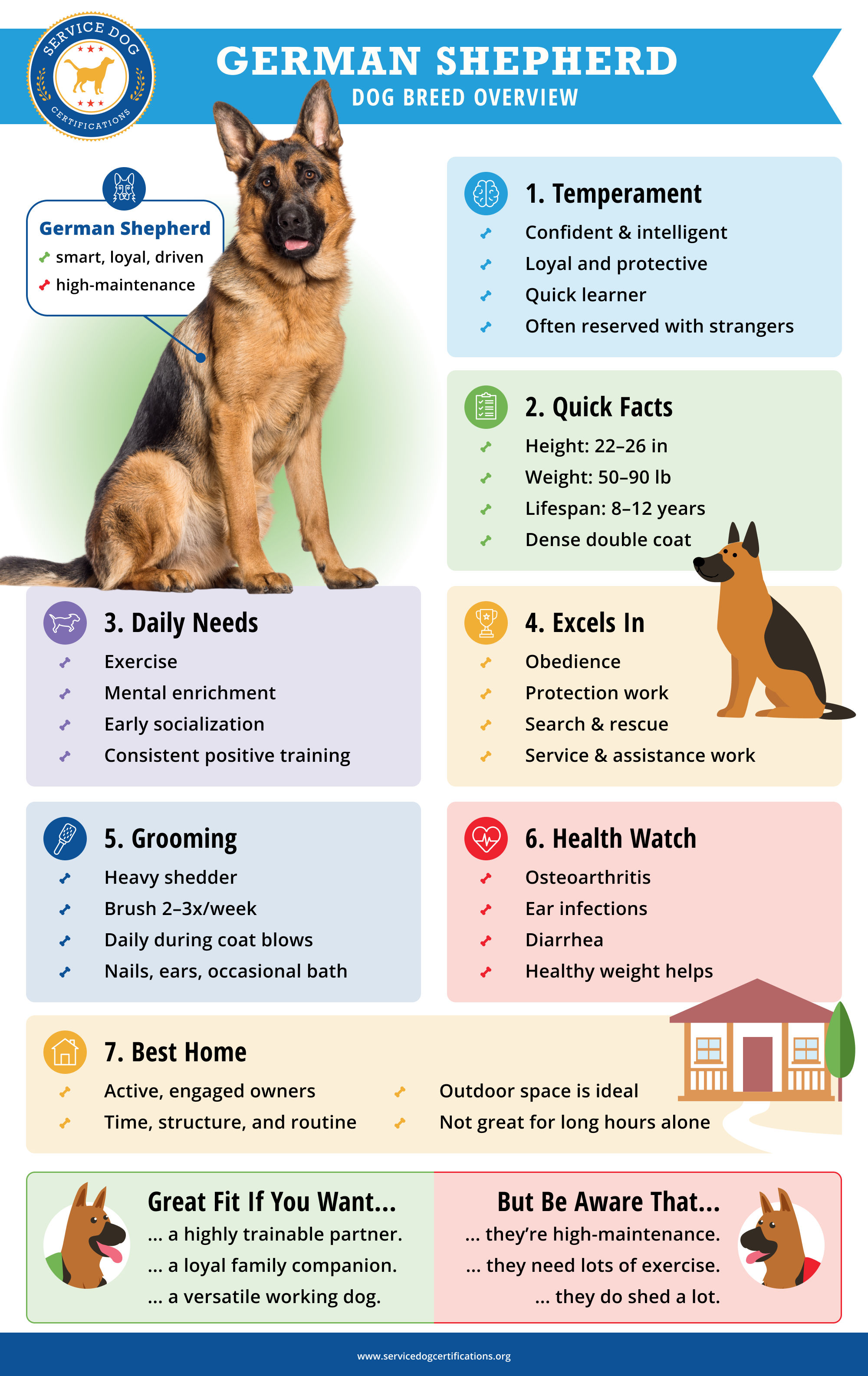
German Shepherds are known for their confidence, intelligence, and strong protective instincts. They form deep bonds with their families and are often described as loyal to the point of devotion.
They tend to be protective, naturally inclined to guard their home and family. German Shepherd Dogs are also intelligent, quick learners who are energetic and driven, happiest when given a job or purpose. They can, however, be reserved with strangers and often aloof rather than overtly friendly.
This combination of traits makes them exceptional working dogs, but it also means they require early socialization and consistent training. Without this, their protective tendencies can tip into over-guarding or reactivity.
Well-bred and properly socialized German Shepherds are typically stable, confident, and affectionate with their own families. They can be excellent with children, though close supervision is always important given their size and strength.
Size and Weight
German Shepherds are a medium-to-large breed with an athletic, muscular build. Their physical structure is designed for endurance and agility, traits that underpin their success in working roles.
Typically, their height ranges from 22–26 inches (56–66 cm) and their weight from 50–90 lbs (22–40 kg).
Males are generally larger and more robust than females. The breed has a slightly elongated body, erect ears, and a bushy tail, with a dense double coat that can be either medium or long.
Lifespan and Health Issues
The average lifespan of a German Shepherd is typically around 8–12 years, according to UK VetCompass data. However, studies suggest this is a slightly lower average than that of other breeds.
German Shepherds are predisposed to several inherited and conformational health conditions. According to a study published in Springer Nature Link in 2017, the most frequent breed disorders are:
- Osteoarthritis: a common degenerative joint disease affecting mobility
- Otitis externa: ear infections and inflammation
- Diarrhea
The most common causes of death are musculoskeletal disorders and the inability to stand.
Responsible breeding, including health screening, plays a significant role in reducing risk. From a veterinary perspective, weight management, appropriate exercise, and early intervention are key to maintaining long-term musculoskeletal health.
Grooming and Shedding
This breed is often nicknamed a “German Shedder” for good reason. Owners should expect a significant amount of hair in the home and be prepared for regular grooming maintenance. German Shepherds have a dense double coat, consisting of a coarse outer layer and a thick insulating undercoat. They undergo heavy shedding year-round, with seasonal “coat blows” twice annually.
The routine grooming needs of a typical German Shepherd dog include brushing 2–3 times per week (daily during heavy shedding periods), regular nail trimming, ear checks, and occasional bathing as needed.
Despite shedding, their coat is relatively low-odor and naturally protective, so over-bathing is unnecessary and may disrupt skin health.
Training and Intelligence
German Shepherds are widely regarded as one of the most intelligent dog breeds. Their ability to learn commands quickly and perform complex tasks is a defining trait. They excel in obedience training, protection work, search-and-rescue, service dogs, and other assistance roles.
However, intelligence comes with a caveat: they require consistent daily physical and mental stimulation. Without it, they are prone to boredom-related behaviors such as destructive chewing, excessive barking, and other undesirable behaviors.
German Shepherds respond best to confident, consistent handlers. They are not typically suited to inexperienced owners unless supported with training guidance. Training should begin early, using consistent positive reinforcement methods, and include ongoing mental enrichment, such as scent work, puzzle toys, and training drills.
Pros and Cons of Ownership
German Shepherd ownership is rewarding, but it requires commitment and consistency. This is not a “set-and-forget” breed! Success depends on active engagement.
Pros
- Highly intelligent and trainable
- Loyal and protective family companion
- Versatile, excelling in many roles and activities
- Strong human-animal bond
Cons
- High exercise and mental stimulation needs
- Heavy shedding year-round
- Can develop behavioral issues without proper training
- Not ideal for long periods alone (prone to separation-related issues)
- Potential for breed-specific health problems
Best Environment
German Shepherds are best suited to active households with time, space, and experience. Ideally, they would have homes with access to outdoor space (secure gardens preferred), owners who can provide daily exercise, and mentally stimulating environments, such as with training, work, or structured play. They thrive when they are included in family activities, given clear structure and routine, and provided with purposeful tasks or training.
While they can adapt to various living situations, including urban environments, they are generally not well-suited to sedentary lifestyles or prolonged isolation. Working lines, in particular, may have even higher drive and energy levels, requiring experienced handling and significant time investment.
The German Shepherd is a popular breed, well-loved for their intelligence, loyalty, and propensity to form deep, meaningful bonds with its owners. For the right household, they offer unmatched companionship and versatility. However, they can also be demanding dogs. Prospective owners should carefully consider whether they can meet the breed’s needs for exercise, training, and engagement.
In the right environment, a German Shepherd is not just a pet; they become a dependable four-legged partner.
About the Author: Dr. Lizzie Youens, BSc (Hons), BVSc, MRCVS, is a veterinarian with academic training in Veterinary Science, Veterinary Medicine, and Animal Behavour & Welfare. She brings more than a decade of experience across diverse veterinary settings, including rural branch practices and large hospital environments. Lizzie resides in the Forest of Dean with her family and two rescue cats.
Related Articles

Benefits of a Raw Food Diet for Dogs
Diet is a very important part of keeping your dog healthy. There have been many articles about dog food made in China that had harmful ingredients. A raw food diet is the most natural and healthiest way to feed your favorite canine. Here are a few arguments about feeding your dog a raw food diet. […]

Read More

Fourth of July Pet Safety: What Can My Dog or Cat Eat?
Your dog is probably going to beg for food at your Fourth of July party. Your cat might try to sneak a taste of something when nobody’s looking. Most of the time, a little bite won’t hurt them, but sometimes it will. Veterinarians have seen too many pets end up sick because someone didn’t know […]
Read More

How to Keep Your Dog Safe on Halloween
Imagine Halloween through the eyes of a curious dog: baffling sights, peculiar smells, and an array of sounds, from the joyful squeals of costumed children to the persistent ringing of doorbells. It’s a time of excitement and potential stress that warrants special attention from dog owners. Here, we explore how to make Halloween a joyful, […]
Read More