


Service Dogs for Autism: How Can They Help?
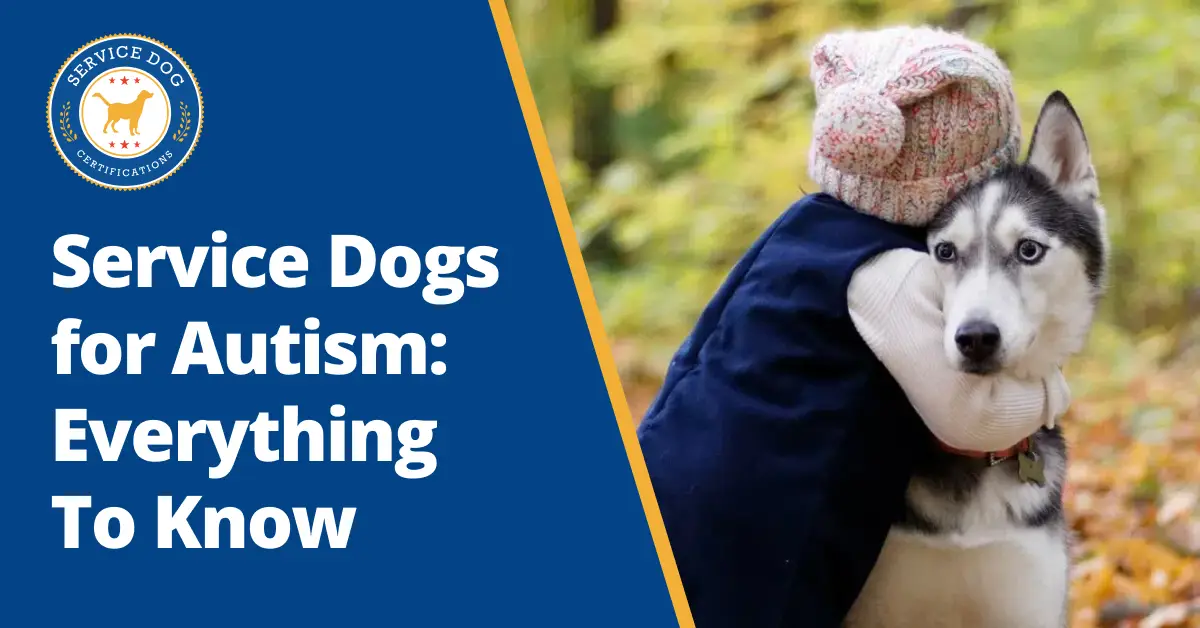
Autism service dogs are trained to support autistic children and adults in a wide range of areas, depending on the individual’s specific needs. They may help to ensure the individual’s safety, support their emotional needs, provide nonjudgmental support in social situations, and more. Because people with autism are so different from one another, autism service dogs may be trained to provide a range of services.
In this article:
- How service dogs help with autism
- Specific tasks and training
- Who can benefit
- Limitations and considerations
How Service Dogs Help with Autism
People with autism spectrum disorder may be children or adults, highly intelligent or intellectually disabled. They may be physically strong or have physical limitations. They may function in a wide range of settings, from typical homes and businesses to specialized institutions. Some are very capable of complex intellectual conversation, while others are unable to use spoken language. What all these people have in common is a set of symptoms which, at one level or another, impact their ability to function effectively in an ordinary situation. Specifically, most people with autism:
- Struggle with social communication in some way
- Experience sensory cravings or are easily overloaded by sounds, sights, smells, and tactile experiences
- Crave structure and routine
- Have repetitive behaviors, such as rocking or humming
- Have special interests on which they focus almost exclusively
- May struggle with emotional regulation
Because there is such a range of needs, service dogs help in a myriad of different ways. For example, service dogs may:
- Keep autistic children and profoundly autistic people safe when, as often happens, they “elope” from school or home.
- Provide sensory support by pressing against the individual or protecting them from sensory assaults.
- Offer nonjudgmental companionship, which is often important because bullying and microaggressions are common experiences for autistic people.
- Help to break the ice in social interactions.

Specific Tasks and Training
Autism service dogs can be trained to provide exactly what an individual needs, but of course, the dog and the individual must be matched before the training is completed. Here are some examples.
Deep Pressure Therapy for Anxiety
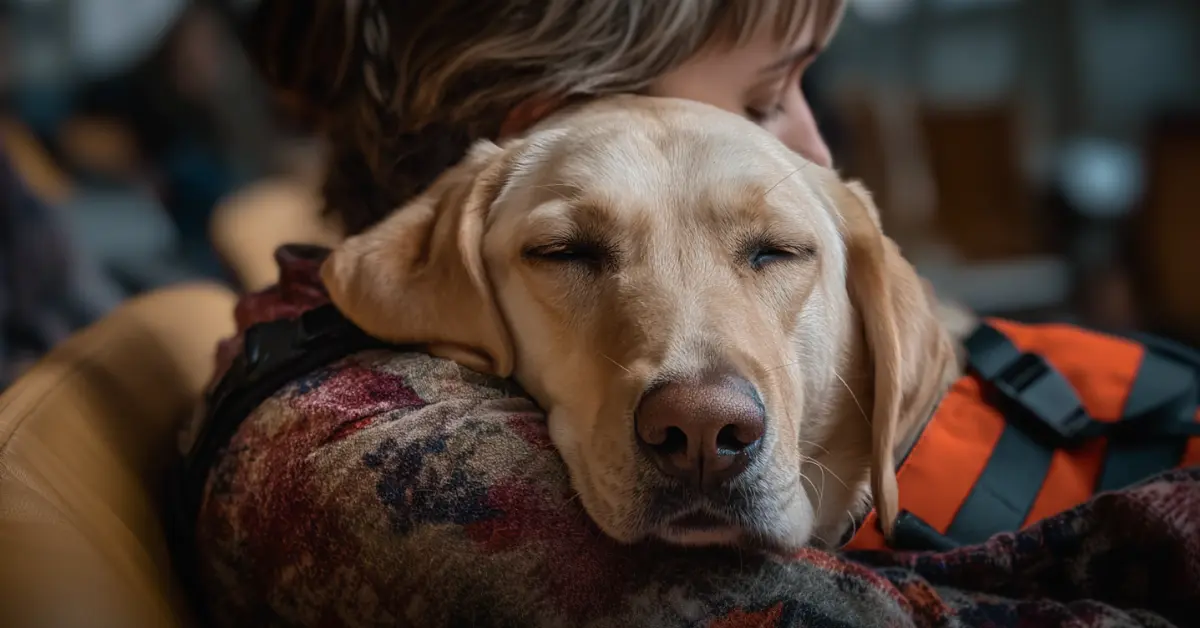
A famous autistic adult, Dr. Temple Grandin, describes her need for intense physical sensation to relieve anxiety. To meet that need, she built something she called a “squeeze machine,” which provided intense pressure without pain or the need for social interaction. While not all autistic people need this kind of pressure, many do. And a service dog can be trained to provide what’s referred to as “deep pressure therapy.” Deep pressure therapy can involve a dog literally lying down on top of a person, pressing against them, or sitting on their legs or feet. Of course, the type of deep pressure therapy provided will depend on the individual’s needs, preferences, size, and age.
Safety Training
Some autistic children and adults with more profound autism can become overwhelmed and anxious and “bolt” or “elope” from a situation. When this occurs, there’s a real possibility of danger because they may not recognize or respond to moving cars or other hazards. They may also lose their sense of direction or become alarmed by unexpected sights and sounds. Autism service dogs can be tethered to individuals who are likely to bolt, keeping them safe.
Managing Personal Space and Overstimulation
Autism dogs are often trained to help autistic people maintain personal space and manage very stimulating situations. This type of training will vary greatly depending on the types of situations the individual is likely to experience and the commands the individual is able to give. For example, a dog can place themselves between their owner and a crowd to help that person avoid the sensation of being pushed.
Supporting Positive Behaviors
Not all autistic adults or children experience what are called “autistic meltdowns,” and many autistic individuals can appropriately engage with others, and observe and respond to social interactions. Some, however, are unable to behave typically and may become overwhelmed and respond with tantrums, aggression, or self-aggression. Often, these behaviors are rooted in anxiety.
Service dogs can be trained to intervene in these types of situations. For example, they can alert an autistic person to repetitive behaviors, such as twirling or rocking, which may be dangerous or disruptive, and offer a different option, such as petting or stroking. They may also lick or nose the individual to provide needed sensory stimulation to help them self-calm.
Providing Stability and Routine, Reducing Anxiety
Autism service dogs can be a stable support who accompanies an autistic individual into every situation and provides comfort and consistency. This simple service can make a tremendous positive difference, especially for individuals who cope with the complex changes of daily life. By reducing anxiety throughout the day, autism service dogs can also improve sleep, an important issue for many people on the spectrum.
Who Can Benefit
Both children and adults on the spectrum can benefit from owning a service dog. In addition, both high-functioning autistic people and those with profound autism can benefit from their services. Some research also suggests that service dogs can make life easier and pleasanter for the autistic individual’s entire family.
There are, however, some criteria that must be met. Specifically, the prospective owner must:
- Be comfortable with dogs
- Be capable of interacting appropriately with a service dog (though it may not be necessary for the individual to use spoken language)
- Live in a setting or family where a service dog is welcomed, treated well, and provided with appropriate healthcare, food, and love
- Either be capable of caring for the dog or have a full-time caregiver who is able and willing to care for and manage the dog
Limitations and Considerations
While most autistic people can benefit from owning a service dog, there are exceptions to the rule. Most importantly, both the person and the dog must be safe, and while most autistic people are not aggressive, some can actually pose a danger to a service dog.
It’s also important that a service dog fits into the autistic person’s family or living situation. While most autistic people do live either with their families or in typical community settings, some live in institutional settings where it might be difficult to keep a dog. Even in a family, it’s important that the dog be accepted as a service animal and not treated as a pet.
About the Author: Lisa Jo Rudy, M.Div. has been writing on developmental disabilities and mental health since the early 2000s, when her son was diagnosed with autism. Lisa lives on Cape Cod, where she is the proud "mom" of two beautiful cats.
Related Articles

How Dogs Can Calm Anxiety
A person suffering from anxiety attacks experience many risks, and it’s one of the reasons why it’s prudent to consider having a service dog or emotional support animal as a companion. The animal can keep the environment safer for the individual and below are some of the ways a dogs can calm anxiety: 1) Dogs […]

Read More
How Dogs Stop Panic Attacks
When a panic attack hits, your heart races, chest tightens, and thoughts scramble, leaving you in a vulnerable state. Debilitating panic attacks can qualify as an ADA disability, and a psychiatric service dog can be trained to stop a panic attack by doing the following: • Performing deep pressure therapy that switches your nervous system […]
Read More
Service Dogs for PTSD
Service dogs for mental health, known as psychiatric service dogs (PSD), can help certain people with post-traumatic stress disorder (PTSD). A PTSD service dog can legally accompany their handler in areas open to the public, residential buildings that ban pets, and on airplanes. In this article, we will explain how a service dog can assist […]
Read More
My landlord is trying to evict me for my service dog after I’ve been living there since we are not of the certain she wants him gone