


Service Dogs for Seniors
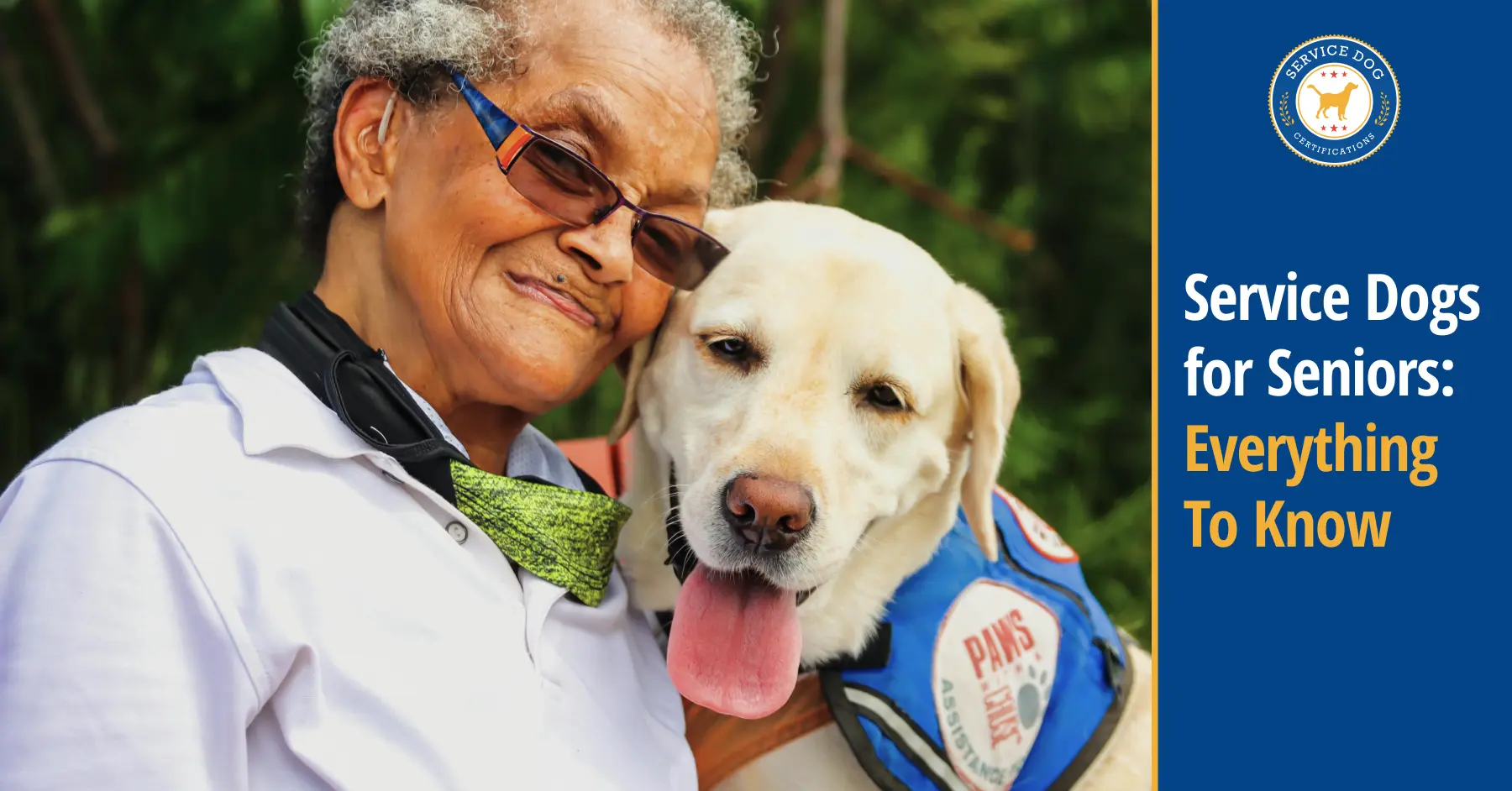

Few older adults relish the idea of leaving their homes for a continuing care facility or nursing home. While there may come a time when that’s a necessity, in many cases, a service dog can provide enough support to maintain comfortable independence. What’s more, a service dog can provide companionship, protection, and a social connection.
In this article:
- Service dogs versus pets and emotional support dogs
- How can seniors benefit from owning a service dog?
- Is a service dog right for me as a senior adult?
- Who cares for the service dog if the senior cannot?
- Selecting a service dog
- Paying for a service dog
Service Dogs Versus Pets and Emotional Support Dogs
Service dogs are not pets, nor are they emotional support animals, though they may become beloved companions. While pets are simply companions, and emotional support animals help manage specific psychological issues, service dogs are highly trained to perform specific tasks to help people with disabilities.
This distinction is very important because, while the ADA states that service dogs must be allowed in almost every public setting, neither pets nor emotional support animals get that same protection. In addition, while a pet or emotional support dog may be very bright, they lack the critical training needed to support an individual’s particular needs.
How can seniors benefit from owning a service dog?
Of course, people of all ages have disabilities. But seniors, according to the American Psychological Association, are more likely to have increasing physical, neurological, and psychological needs than other age groups. At the same time, says the Pew Research Center, most seniors would far rather age safely in their own homes than require nursing or assisted living. Service dogs can make that happen, in the right circumstances. They provide:
- Increased independence and aging in place.
Service dogs can fetch and carry, which is especially helpful when coping with arthritis or related orthopedic or muscular issues. They can also carry objects, open doors, help with putting on or removing clothing, turn lights on and off, and much more. - Mobility and Fall Prevention Support.
Anyone who is coping with back or knee pain or recovering from surgery knows how important it is to have strong support available. Larger service dogs can help you up out of a chair, support you as you sit, make space around you as you walk, help you manage in the bathroom, and bring you help if you need it. - Health Monitoring and Medical Alerts.
Specially trained service dogs are capable of identifying a blood sugar emergency in a person with diabetes and providing support by bringing food, insulin, or even a telephone. They can also identify a seizure and provide physical support to avoid injury. - Encouraging Physical Activity and Routine.
Like any dog, service dogs do need exercise. For seniors who are able to provide it, they serve as a wonderful incentive to get up and move! - Cognitive Support Tasks.
For anyone who is struggling with memory issues, service dogs can be a lifesaver. They can provide timely reminders, bring medications when they are needed, help prevent wandering and eloping, and offer relief from agitation, anxiety, and depression.
All of these are valuable services that might otherwise be provided by a home care provider or staff at a nursing or care center. The difference in cost, of course, is huge; so, too, is the sense of independence you’ll experience when you can depend on your service dog.
Is a service dog right for me as a senior adult?
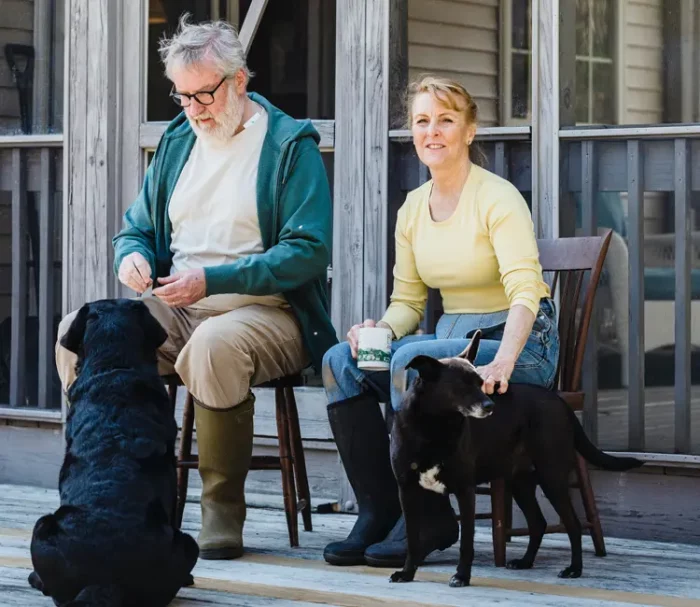
To own a service dog, you must have the money, space, and ability to care for an animal. Your needs must match the services a dog can provide. And, if you are old enough, you may need to have a solid plan in place should you pass away before your dog does. To determine whether a service dog is right for you, consider these questions:
If you need only companionship, you won’t want to spend money on a service dog. On the flip side, if you really need skilled nursing or a relatively high level of daily care, a dog may not be able to fill all your needs.
In most cases, seniors will want a larger dog that can provide physical support for standing, sitting, toileting, and other activities.
Bottom line, if you live in the United States, ADA laws require access to trained service dogs. That said, there are some communities where owning a dog can lead to negative interactions with neighbors and staff. When that’s the case, having a service dog may be more trouble than it’s worth.
There are grants available for service dog owners, but for the most part, you will have to pay costs for purchasing, feeding, and caring for your dog. A trained service dog costs between $15,000 and $30,000, and annual veterinary expenses can be high, depending on the breed. Of course, this is low compared to the cost of an in-home aide or continuing care facility!
If you really can’t walk far, brush your dog’s coat, or feed it, you may not be able to care for your dog appropriately. That may mean hiring someone to do those chores, which, of course, increases costs.
Who cares for the service dog if the senior cannot?
Ideally, the person who owns a service dog cares for it. But in many cases, that’s simply not possible. Fortunately, there are a number of other options available, both for dog care and for transition if the dog’s owner passes away.
Planning for Caregiver Support
If significant support is needed and family members are nearby, a friend or family member may be able to take on much of the work involved in dog care. That is likely to include feeding, grooming, exercising, and veterinary care. It may also be a good idea for the backup caregiver to receive training at the same time as the senior dog owner, so that they can work with the dog should the owner be unable to.
Professional Support Options
It’s always possible to pay for extra dog care. In the case of a trained service dog, however, local teens may not be the ideal answer. Service dogs may require a level of care that only an experienced adult can provide. That care may come from professional dog walkers, trainers, or caregivers.
Transition Plans if the Senior’s Health Declines
When a senior adult needs a service dog because their health is declining, there’s a good chance that the dog will outlive its owner. That’s why it’s a very good idea to know, in advance, who will adopt the dog when it can no longer live with its owner. Whenever possible, the dog’s owner should take the lead in deciding on their dog’s potential future. Transition plans should ideally be in writing and kept in an easily accessible location. In some cases, it may be necessary to have a lawyer review the document to be sure it is legally binding.
Selecting a Service Dog
While some people do buy puppies and train them themselves, seniors are best off purchasing a fully trained service dog. Dogs are trained for specific needs, so you will need to discuss your specific needs with the breeder/trainer to be sure the dog you choose can do exactly what you need it to do. Costs can vary dramatically, and the most expensive dogs aren’t always the best for your needs. It’s smart to research breeders and costs carefully to be sure you have the right dog with the right training at the best price.
Finding a Breeder
It can take a bit of work to find the right breeder, but it’s worth the effort. The best breeders emphasize dogs’ health and temperament and provide plenty of socialization to prepare them for life with humans. A good breeder:
- Most likely has a waiting list for popular breeds
- Is willing to share the dogs’ health records with you
- Will allow you to spend time with multiple dogs to ensure a good match
- Is a member in good standing of a major kennel club
- Provides a warranty that will allow you to return a dog if it doesn’t fit your needs
Choosing a Breed
Smaller breeds are ideal for smaller spaces, but only if the dog can provide the services you need. In most cases, seniors need support with mobility and safety, and that means they need a larger dog that can provide that support. Of course, bigger dogs require more food and more exercise, and that’s something to consider when making your choice. Some of the most popular larger service dog breeds include:
- Golden Retriever
- Labrador Retriever
- German Shepherd
- Standard Poodle
- Collie
If your goal is to find a smaller dog that can provide services such as alerting others to a medical need, fetching small objects or medicines, or providing psychological support, there are several good options available. Some of the most popular include:
- Yorkshire Terrier
- Maltese
- Poodle
- Corgi
- Pomeranian
Applying for Your Service Dog
If you’ve had pet dogs, you know there’s really nothing to the adoption process. You simply choose the dog you want, pay the pound or breeder, and walk away with a new friend. But when you buy a service dog, you must go through an application process to ensure that you and the dog will be a good fit. Most service dog breeders will require:
- Documentation regarding your specific disability and needs
- Interviews to determine that you are capable of working well with a service dog
- Training to provide you with the skills you need to work with a service dog
- Home visits to ensure that your home is a good match for a particular dog
- Proof that you have the financial resources to care for your dog
Paying for a Service Dog
A well-trained, healthy service dog is not cheap, and neither is the care you’ll need to provide to keep your dog healthy and happy. While it is possible to train any appropriate puppy to provide services, few seniors have the time and stamina to go through the process.
The average cost of a service dog is $15,000–$30,000. In theory, any service dog you buy from a reputable trainer should be healthy, but no one can guarantee ongoing health. Costs for food and veterinary services will vary, but can certainly reach into the thousands. If you have the money available, you’re all set. If you don’t, there are a few resources available.
It’s important to know that neither Medicare nor Social Security nor private health insurance will pay for your service dog. If you are still working, you can deduct the cost of your service dog from your taxes, but for most seniors, that’s not much help. There are, however, several ways to mitigate service dog expenses. These include:
- Flexible Spending Accounts (FSAs) are an employer-sponsored benefit plan governed by the IRS. If you’ve built up an FSA, now is a good time to use it.
- Grants from organizations such as Canine Companions, Paws4people, Assistance Dogs International (ADI), Duo Dogs, or Petco Love.
- GoFundMe Campaigns that leverage the support of friends and neighbors for the high one-time cost of purchasing a service dog.
- Programs for Veterans such as America’s VetDogs, K9s For Warriors, and Paws for Purple Hearts
Let everyone know your service dog is an indispensable part of your life with your Service Dog ID.

About the Author: Lisa Jo Rudy, M.Div. has been writing on developmental disabilities and mental health since the early 2000s, when her son was diagnosed with autism. Lisa lives on Cape Cod, where she is the proud "mom" of two beautiful cats.
Related Articles

How Dogs Can Calm Anxiety
A person suffering from anxiety attacks experience many risks, and it’s one of the reasons why it’s prudent to consider having a service dog or emotional support animal as a companion. The animal can keep the environment safer for the individual and below are some of the ways a dogs can calm anxiety: 1) Dogs […]

Read More
How Dogs Stop Panic Attacks
When a panic attack hits, your heart races, chest tightens, and thoughts scramble, leaving you in a vulnerable state. Debilitating panic attacks can qualify as an ADA disability, and a psychiatric service dog can be trained to stop a panic attack by doing the following: • Performing deep pressure therapy that switches your nervous system […]
Read More

Service Dogs for PTSD
Service dogs for mental health, known as psychiatric service dogs (PSD), can help certain people with post-traumatic stress disorder (PTSD). A PTSD service dog can legally accompany their handler in areas open to the public, residential buildings that ban pets, and on airplanes. In this article, we will explain how a service dog can assist […]
Read More
Hello, I’m a disabled, low income, 63 yo male. I live in Modesto, California. I am alone and fall quite often. I have a muscular disease. I need a service dog. Any suggestions? Thank you, Geno
Unfortunately we do not provide service dog adoption referrals. We wish you the best of luck in your search however.
Does the service dog need to be the only dog in the home?
Service dog owners can have other dogs in their home, whether they are another service dog or normal dog (assuming the building allows for non-service dogs).