


What is a Seizure Alert Dog?
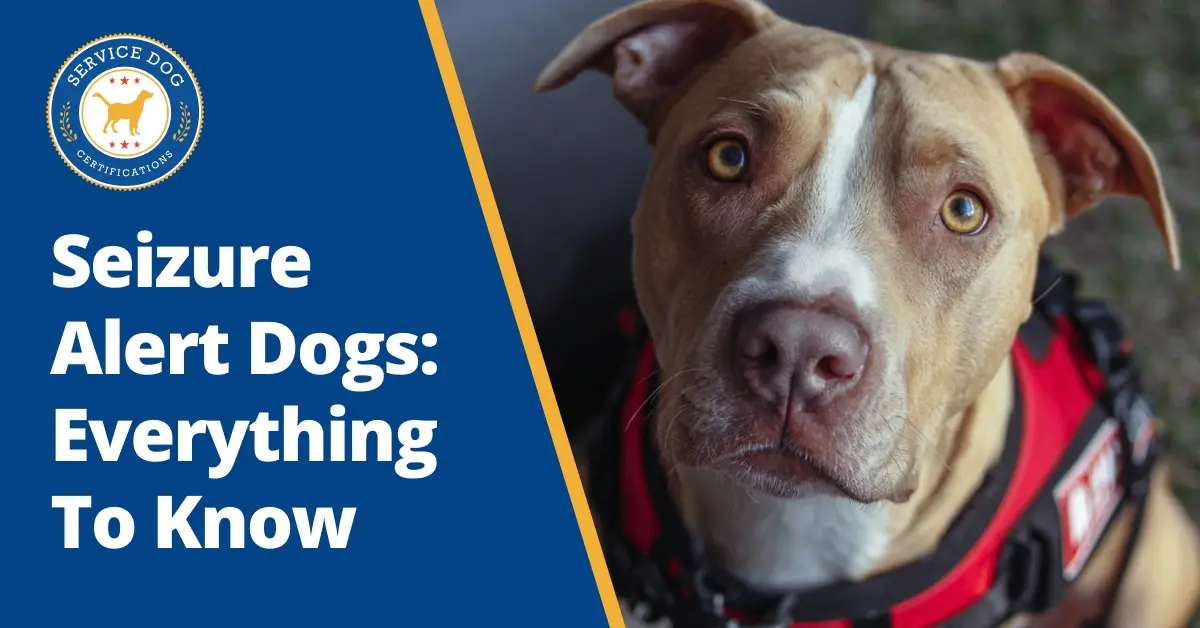
A seizure alert dog is a service dog that can alert a person to an oncoming seizure. Most can also respond when the seizure occurs. Seizure alert dogs can help individuals with epilepsy anticipate seizures and manage them when they occur.
In this article:
- The difference between a seizure alert dog and a seizure response dog
- How dogs detect seizures
- How dogs are trained to detect or respond to seizures
- Best breeds for seizure service dogs
The Difference Between a Seizure Alert Dog and a Seizure Response Dog
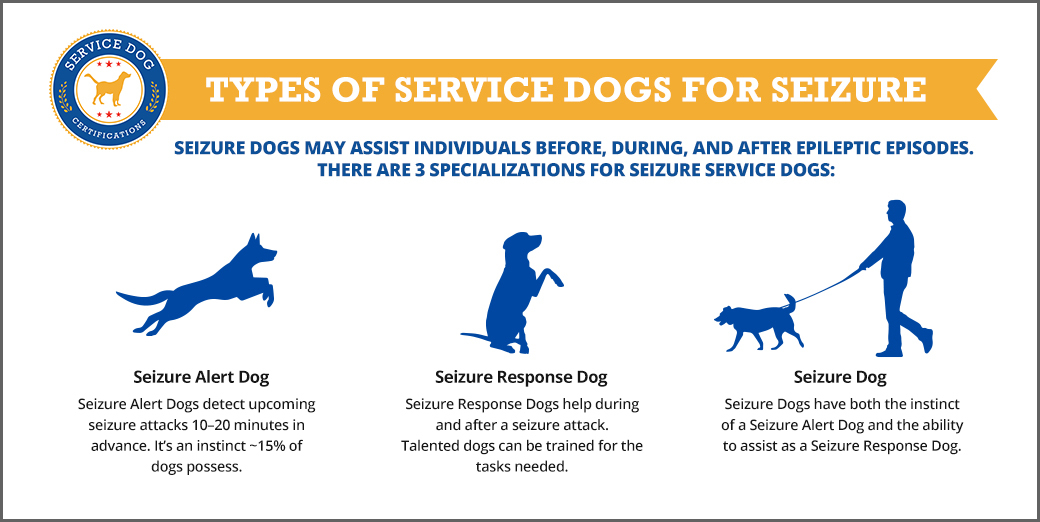
Most service dogs used by people with seizure disorders are trained to respond to seizures during and after they occur, so they are often referred to as seizure response dogs. Some dogs, however, can anticipate seizures and alert their owners before they happen. Such dogs are referred to as seizure alert dogs.
While most service dogs can be trained to respond to an actual seizure when and after it occurs, relatively few seem to have the skills required to anticipate and warn an individual that a seizure is approaching. So far, there is no official training program for seizure alert dogs, though there are training programs for seizure response dogs.
Share this image on your site
How Dogs Detect Seizures
Dogs that can actually anticipate seizures are most likely responding to a change in their owner’s smell and very minor changes in behavior. Dogs can detect subtle differences in scent, and service dogs can be trained to detect changes in blood sugar levels and even the presence of certain cancers.
Research into seizure-detecting dogs tested dogs’ ability to distinguish between the smell of ordinary sweat and sweat produced during and after a seizure, and some dogs have shown that they can detect olfactory changes. Studies also suggest that even some pet dogs may become aware of unsettling changes in their owner. When this happens, the dog may exhibit certain behaviors seconds or minutes before the seizure occurs. These behaviors include:
- close eye contact
- circling
- pawing
- barking
The availability of a seizure alert job could change the lives of many people with seizure disorders. One of the most difficult aspects of seizure disorders is the inability to predict and prepare for seizure events, which can cause distress and injury. Knowing about a seizure ahead of time could help prevent these issues and make it far easier to engage in ordinary activities of daily life.

How Dogs Are Trained to Detect or Respond to Seizures
In theory, a service dog can be trained to alert an individual owner’s seizure before it happens. This would require the dog to observe and smell changes in the owner’s scent and behavior multiple times. So far, while some trainers do claim they can provide such training, most sources question whether the skills can be learned. There are, however, many anecdotal stories and some small studies suggesting that individual dogs can and do alert their owners to seizures up to 45 minutes in advance.
Far more common than seizure alert dogs are seizure response dogs, who can indeed be trained to provide a wide range of services for an individual who is actually experiencing a seizure or recovering from one.
A seizure response dog is trained to perform specific tasks during and after a seizure to ensure the handler’s safety and well-being. For example, seizure response dogs may:
- Alert others to the seizure by barking or activating an alarm
- Lie down next to the person to cushion a possible fall
- Retrieve medicine
- Provide support for the person as they get up after a seizure
- Use a special phone alarm to summon help
- Help with recovery by providing deep pressure or by licking the person’s face
Best Breeds for Seizure Service Dogs
While any breed of dog can be trained as a service dog, certain breeds are generally considered more suitable for assisting individuals with seizures. These breeds are usually:
- Intelligent
- Eager to please
- Alert and sensitive to changes in their owner’s behavior
- Calm and reliable under stress
- Physically large, strong, and tough
Some of the most appropriate dogs for seizure-related service include:
- Golden retrievers
- Collies
- Labrador retrievers
- German shepherds
- Standard poodles
Of course, an individual’s choice of service dog will depend on their physical and financial circumstances and, most importantly, on their ability to bond with a particular dog. Seizure alert and response dogs must be very connected to their owner, so a personal connection is an important key to success.

About the Author: Lisa Jo Rudy, M.Div. has been writing on developmental disabilities and mental health since the early 2000s, when her son was diagnosed with autism. Lisa lives on Cape Cod, where she is the proud "mom" of two beautiful cats.
Related Articles

Hipster Dogs: Trendy Pups, Beards, and Beanies
From PBRs to beanie caps, and from plastic sunglasses to “pawsome” music, hipster dogs have taken the world by storm, and there’s no turning back. Because, let’s face it, these little guys and gals were rocking the style before it was cool — not that they would care what’s cool, though. For a “pawsitevly” good […]

Read More

How Dogs Can Calm Anxiety
A person suffering from anxiety attacks experience many risks, and it’s one of the reasons why it’s prudent to consider having a service dog or emotional support animal as a companion. The animal can keep the environment safer for the individual and below are some of the ways a dogs can calm anxiety: 1) Dogs […]
Read More
Can Cats Be Service Animals?
Having a cat brings the same positive effects as dogs. These pets can be equally beneficial to a person’s health. Experts have proven that cat owners are less likely to have a health emergency, such as a heart attack, with their feline companion around and cats have also been proven to help alleviate sleeping disorders, […]
Read More