


Adopting a Failed Service Dog
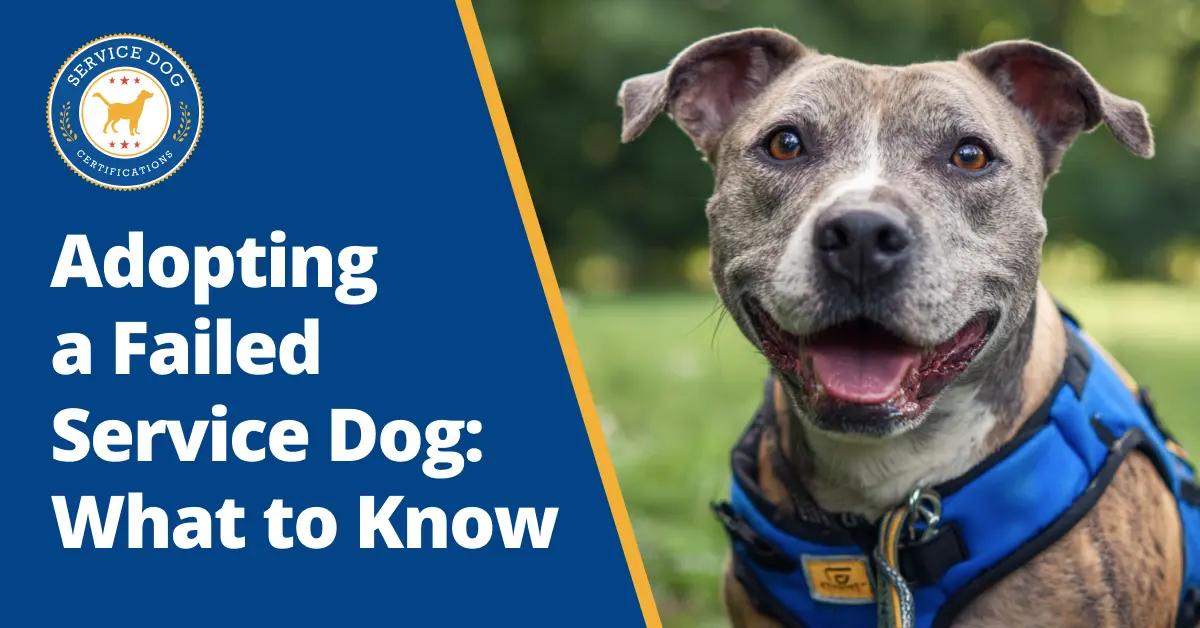

It’s not hard to adopt a “failed” service dog, but it does take some time, research, and money to make it happen. “Failed” or “career change” dogs are animals that were selected to be trained as service dogs but were unable, for some reason, to successfully complete their training. They’re desirable as pets because they tend to be selected for their good health, intelligence, and calm temperament.
Many service dog training organizations are set up to find adoptive homes for “failed” or “career change” dogs, but waiting lists and costs can be high. It’s also important to know that potential service dogs are usually larger breeds, and are most likely to be Golden Retrievers, Labradors, German Shepherds, or occasionally standard poodles. If you’re looking for a smaller dog, you’re better off going directly to a breeder.
In this article:
- Why dogs don’t make it as service dogs
- How to adopt a failed service dog
- Pros and cons of adopting a failed service dog
- Life after adoption
Why Dogs Don’t Make It as Service Dogs
Service dog trainers do their best to find dogs with perfect health, high intelligence, and calm demeanors. Sometimes, however, dogs are not well-suited to demanding service work. This doesn’t mean they’re “bad” dogs; it may mean, however, that they:
- Are overly friendly and have a hard time focusing only on “work”
- Are very energetic and need more exercise than a disabled individual can provide
- Have a health issue, such as hip dysplasia, poor eyesight, or poor smell, that makes service work impossible
- Become anxious in loud or crowded settings, such as airplanes or performance venues
- Are too old to capably fulfill their service requirements
If you are thinking about adopting a failed service dog, it’s important to ask why the dog “failed” their service dog training. Then consider whether that particular issue is compatible with your needs for a pet. For example, even a smart, agreeable dog can have health issues that make them very expensive to own.
How to Adopt a Failed Service Dog
You can adopt a failed service dog from many different organizations, including:
- Service Dogs Inc. (servicedogs.org)
- Freedom Service Dogs of America (freedomservicedogs.org)
- Guide Dogs for the Blind (guidedogs.com)
- Guide Dogs of America (guidedogsofamerica.org)
You can also reach out to smaller service dog training organizations, such as:
- Canine (canine.org/service-dogs/our-dogs/released-dog-adoption/)
- Little Angels Service Dogs (littleangelsservicedogs.org/our-dogs/adopt-a-pet/)
The process of adopting a failed service dog is more complex than simply buying from a breeder. You’ll need to complete an application, and each organization has a slightly different form. You’ll most likely have to answer such questions as:
- Why are you interested in a failed service dog?
- Are you interested in a particular breed, sex, or age?
- How will you provide your dog with appropriate exercise and healthcare?
- Are there any children or animals in your household?
- If you have pets, have they been properly vaccinated?
- Do you own your own home and have enough room for a large dog?
- Are you willing to adopt a dog with a particular health issue?
- Can you visit the dog before adopting?
- How will you transport a dog to your home?
Assuming your application is approved, you’ll then be placed on a waitlist until your application can be matched with a particular dog. For example, if you have children in the house, you’ll have to wait to be matched with a dog that does well with children. The waiting period may take several months or up to a year.
Once you hear that there’s a match, some organizations will want you to come and meet the dog. You may also be asked to bring along other family members and pets. This is an opportunity for you to determine whether the dog is really a good match for your family. It’s also a chance for the trainer to see your family and the dog together, and be sure you’ll work well together.
Assuming everything goes well, you’ll need to sign paperwork, pay a fee (usually around $1,500), and bring your dog home. Once home, you’ll integrate your new pet into your family as you would any pet.
Pros and Cons of Adopting a Failed Service Dog
Service dogs, even those who fail training, are selected and trained differently from other dogs. And, as you’ve seen, the adoption process for such dogs is more complex. This means there are some pros and cons to adopting.
Pros
- When you adopt a failed service dog, you adopt a very desirable pet. These are dogs that have been bred and selected for their intelligence, temperament, and behavior.
- Service dogs go through rigorous training. Even if they don’t become working dogs, they will generally already have the ability to obey commands and even provide some types of service, such as bringing objects to their owners.
- Service dogs are generally healthy, and all have had their vaccinations and vet checks.
- Socialization is part of service dog training, so your dog should have no problem engaging with their human owners.
Cons
- If your new pet is a “failed” service dog, there’s a reason. In some cases, the reason is health-related. Issues such as hip dysplasia, while they don’t make a dog a poor pet, can be expensive to treat. In other cases, the reason is emotional. Your new pet may display anxiety, be hyper-energetic, or be overly friendly to strangers.
- Adopting a failed service dog is more complex, time-consuming, and (in some cases) expensive than simply purchasing a dog from a breeder or adopting from a pound.
- Service dog training may make it tricky to integrate into an ordinary pet/owner relationship. For example, a service dog may be trained to bark under certain circumstances, something you may not prefer in your home.
Life After Adoption
Like any pet, failed service dogs need and deserve a safe and loving home. They also have some needs that differ slightly from those of typical dogs. For example, failed service dogs:
- Are used to a lot of structure and may appreciate clear-cut rules, meal times, etc.
- Are often high-energy animals that need a lot of exercise
- May have training that needs modification for “civilian” family life
- May need help adjusting to a home with children and other pets
It’s a good idea to talk to the organization from which you’re adopting to find out exactly how your pet was trained, and what issues kept them from becoming service dogs. This information will help you plan the process of integrating your new pet into your household.
About the Author: Lisa Jo Rudy, M.Div. has been writing on developmental disabilities and mental health since the early 2000s, when her son was diagnosed with autism. Lisa lives on Cape Cod, where she is the proud "mom" of two beautiful cats.
Related Articles

Hipster Dogs: Trendy Pups, Beards, and Beanies
From PBRs to beanie caps, and from plastic sunglasses to “pawsome” music, hipster dogs have taken the world by storm, and there’s no turning back. Because, let’s face it, these little guys and gals were rocking the style before it was cool — not that they would care what’s cool, though. For a “pawsitevly” good […]

Read More

How Dogs Can Calm Anxiety
A person suffering from anxiety attacks experience many risks, and it’s one of the reasons why it’s prudent to consider having a service dog or emotional support animal as a companion. The animal can keep the environment safer for the individual and below are some of the ways a dogs can calm anxiety: 1) Dogs […]
Read More
Can Cats Be Service Animals?
Having a cat brings the same positive effects as dogs. These pets can be equally beneficial to a person’s health. Experts have proven that cat owners are less likely to have a health emergency, such as a heart attack, with their feline companion around and cats have also been proven to help alleviate sleeping disorders, […]
Read More