


Best Service Dog Breeds for Anxiety

For people coping with anxiety or PTSD, there is no single best breed of service dog. There are, however, particular traits that may be right for a given individual. For example:
- A calm, empathetic service dog can help an anxious individual cope with panic attacks and provide emotional support.
- Intelligence is an important trait for a psychiatric service dog, as only a bright, trainable dog will learn to reliably fetch help, check for danger, or help prevent an anxiety attack.
- A larger dog can provide deep pressure therapy for calming and may be able to provide guard duty in stressful situations.
- Depending on the individual’s living and work situation, it might be important to find a dog small enough to live in a small space.
- Depending on an individual’s physical strength and stamina, it may be beneficial to have a larger dog that requires a good deal of exercise or, alternatively, a smaller dog that requires less physical activity.
There are breeds of all sizes that can fit the needs of a person with anxiety.
In this article:
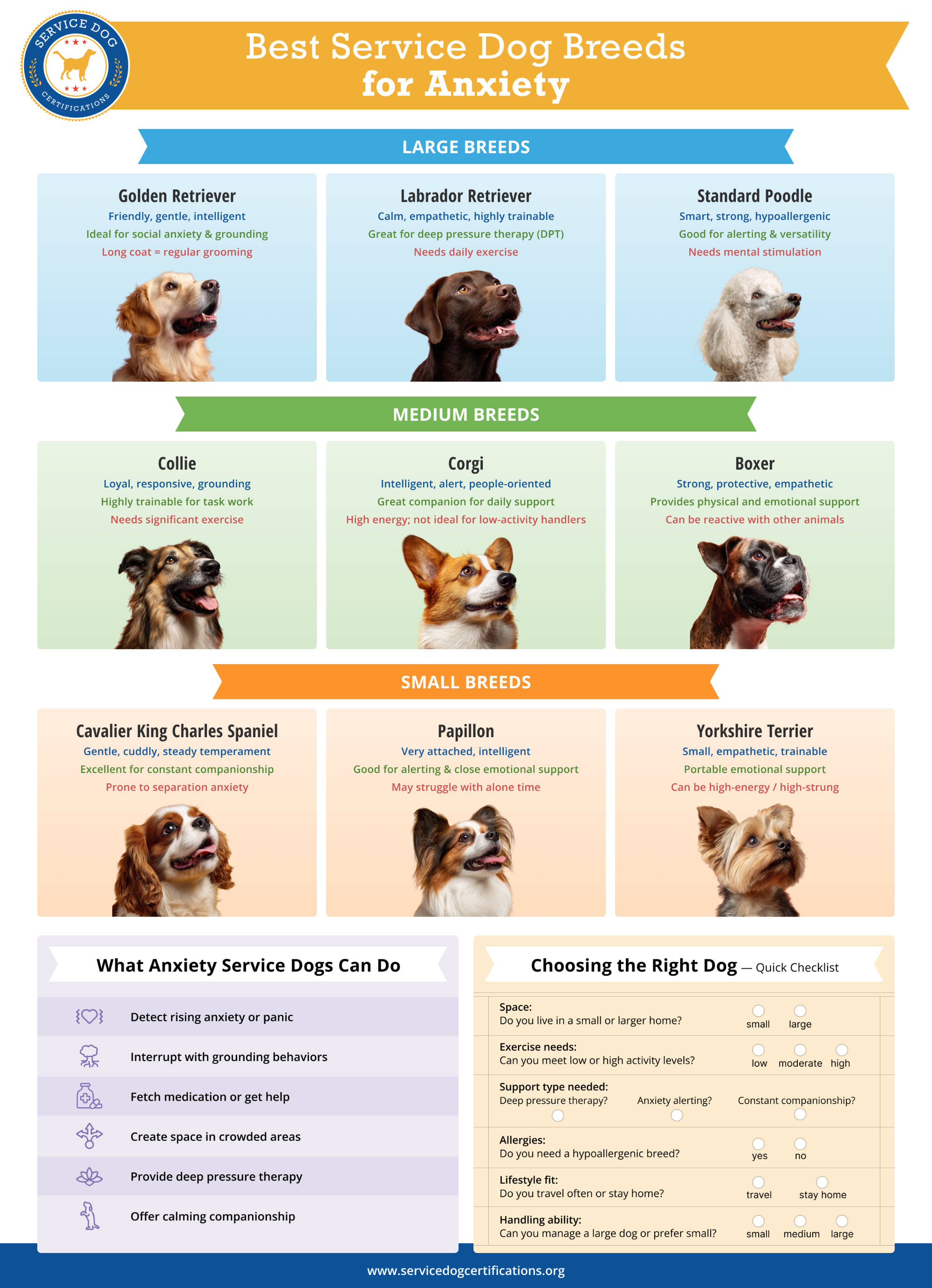
Share this image on your site
Tasks Performed By Anxiety Service Dogs
The role of an anxiety service dog is to reduce anxiety by performing a variety of specific tasks, which may include:
- Some dogs can anticipate anxiety-inducing situations and help their owners avoid them. For example, they can steer owners away from crowded situations, keep strangers at a distance, and check spaces to ensure safety.
- Anxiety support dogs are often trained to observe signs of anxiety before a panic attack occurs, and help by bringing help or medication. They may also be trained to intervene by distracting their owner by licking, giving a paw, or another physical engagement.
- Larger support dogs can provide physical support by pressing against or sitting on their owner. This type of “deep pressure” therapy can be calming for many people.
- Dogs — even pet dogs — can reduce social anxiety by providing an easy focus or topic of conversation with strangers. Service dogs can also provide motivation for exercise, a well-established form of stress relief. Service dogs can also be reliable companions for individuals who find social engagement to be stressful.
Best Service Dog Breeds for Anxiety
The best service dog for anxiety is the dog with the right temperament, intelligence, and physical qualities to fit the individual owner’s needs. That said, certain breeds are more likely than others to be a good choice.
Larger Breeds
Larger service dogs are best for individuals with plenty of space and the ability to provide their dog with exercise. Larger dogs have the advantage of being stronger and more capable of performing specific, physically demanding tasks. On the other hand, they do require a lot of care and can be intimidating to some people.
Labrador Retrievers are among the best options for anxious individuals. This is a breed that’s popular for all kinds of service work, primarily because they combine strength with gentleness, intelligence, trainability, and an unusual degree of empathy.
Golden Retrievers are often a good choice for individuals with anxiety. Goldens, in general, are laid back and friendly. They’re also highly intelligent, empathetic, and easy to train. Because they are particularly attractive dogs, they can make it easy to connect with other people.
Standard Poodles are large but not huge, and, like Labradors and Golden Retrievers, they combine intelligence, empathy, and strength. The benefit of Standard Poodles is that, unlike other dogs, they have hair rather than fur. This means they are hypoallergenic: even people with animal allergies can live comfortably with a poodle.
Medium-Sized Breeds
Medium-sized working dogs are a good compromise in size and often a good bet for people who crave exercise and movement. Some of the most popular breeds for supporting PTSD and anxiety include collies, corgis, and boxers.
Collies are strong, smart, and very engaging. They are bred to be working dogs and, as a result, are highly trainable. Collies do require a fair amount of grooming and exercise, but, while this can be problematic for some people, it can actually be calming for others.
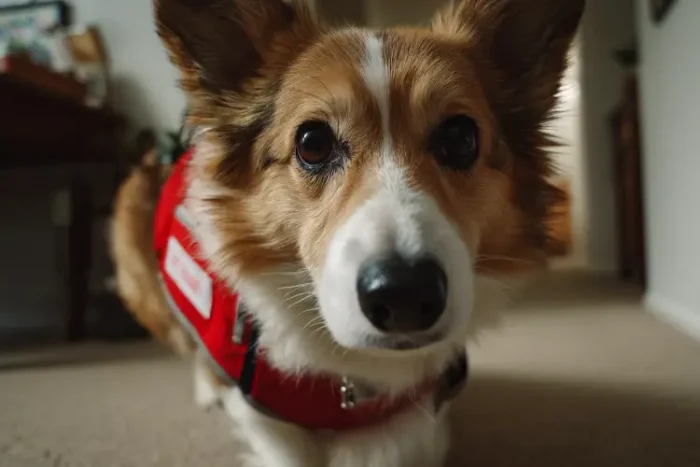
Corgis are sweet, human-oriented dogs with plenty of energy and intelligence. They can be easily trained but, like Collies, do require a lot of exercise and attention. They are great companions and very capable of guarding and supporting their owners. However, they are not able to sit still for long periods of time.
Boxers are strong, loyal, and empathetic dogs. While they’re not a typical service breed, they are reliable and offer a lot to an individual coping with anxiety. On the other hand, boxers are not always good with other animals and may be intimidating to children.
Small-Sized Breeds
Smaller service dogs are easier to care for, more easily integrated into work and community settings, and cost less to feed. On the other hand, they don’t have the physical strength or size to provide the support that larger dogs can offer. Some small service dogs are very empathic, intelligent, and friendly.
The Cavalier King Charles Spaniel is a sweet-tempered dog that is eager to please and very willing to become a lapdog. These highly trainable little dogs are known for their loyalty, obedience, and ability to engage well with people and other animals.
Papillon means “butterfly” in French — its huge triangular ears make it look as if it could fly away. Papillons can become very attached to their owners and can even find it difficult to separate. While this could be an issue for some people, it can also be a benefit for those whose anxiety requires constant support.
Yorkshire Terriers are tiny, intelligent, energetic, and empathetic. They are very trainable and often participate in agility competitions. While they are sweet, they are also a bit high-strung, which means they won’t exhibit the same calm demeanor as some other breeds.
Breeds to Avoid
People with anxiety and PTSD may wish to avoid breeds that are naturally anxious themselves, such as German Shepherds and Cocker Spaniels. They may also want to avoid breeds that can become aggressive with unknown people or animals. These include Dobermans and Pit Bulls. In addition, any person who is selecting an animal to live with should consider:
- Size: Do you have the space you need for this dog’s well-being?
- Exercise needs: Are you eager to get out and run with a big dog? Or do you have days when exercise is challenging?
- Separation issues: Do you prefer a dog that never leaves your side, or are you likely to leave your dog at home alone? Consider the dog’s needs as well as your own.
- Care requirements: Big dogs eat more and need more exercise than smaller dogs, and some breeds are prone to physical health issues. On the other hand, some smaller dogs require an unusual amount of grooming.
- Ability to engage with other people and animals: Do you need a dog that will keep other people at bay, or are you hoping for a service companion that can facilitate social interaction? The breed you choose will make a big difference.
About the Author: Lisa Jo Rudy, M.Div. has been writing on developmental disabilities and mental health since the early 2000s, when her son was diagnosed with autism. Lisa lives on Cape Cod, where she is the proud "mom" of two beautiful cats.
Related Articles
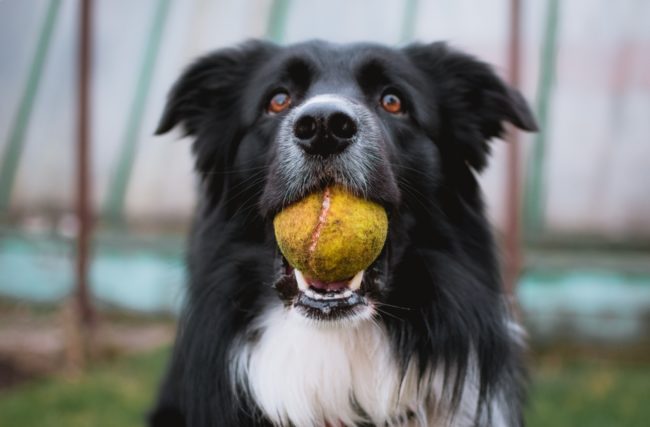
Do Border Collies Make Good Service Dogs?
When choosing a service dog, whether it be for physical or psychiatric disability, it has to be “need over breed.” Let’s face it, you may love the Chihuahua breed, but when it comes to aiding you with specific tasks, this little guy may not be up for the job. Do Border Collies make good service […]

Read More
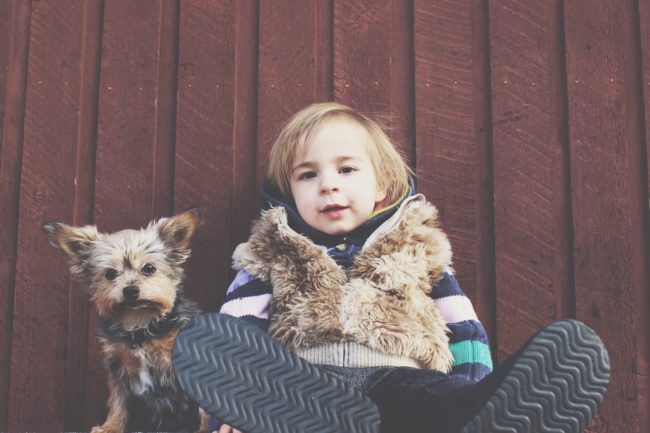
Can a Yorkie Be a Service Dog?
The Yorkshire Terrier is a big dog in a small package. With his silky coat and traditional “topknot,” the Yorkie is sure to attract attention wherever he goes. And because of his pint-size, this dog often travels in style – in designer doggy purses or special totes made just for those “elite” pooches. The Yorkie […]
Read More
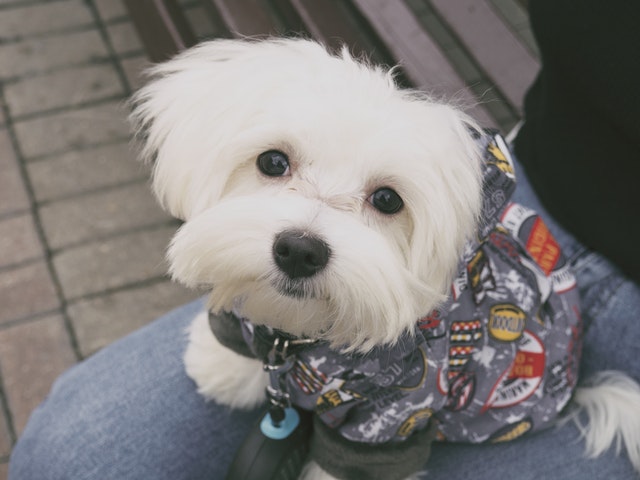
Can a Maltese Be a Service Dog?
Who can resist the snow white coat, dancing eyes, and spunky nature of the Maltese? This cute, spritely little pooch excels at many things like agility, tracking, obedience, and rally. Can a Maltese be a Service Dog? If so, you would be able to go anywhere you go with your Maltese! Read on as we […]
Read More