


Harness vs Collar for Dogs
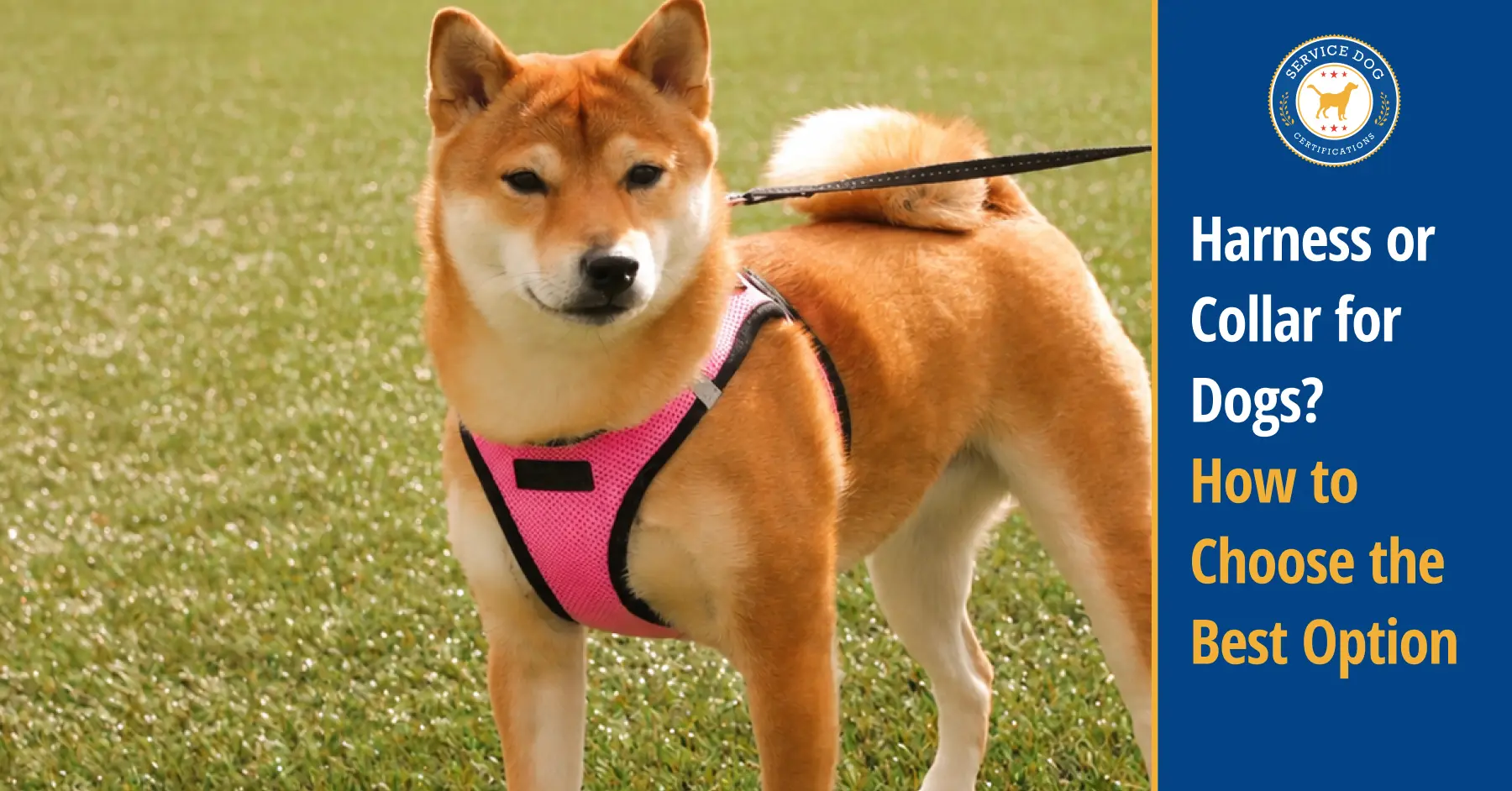

Choosing between a harness and a collar depends on your dog’s size, breed, behavior, training stage, and walking habits. For many dogs, especially puppies, strong pullers, small breeds, and flat-faced breeds, a harness offers better control and reduces pressure on the neck. A collar is still useful for holding ID tags and may be perfectly suitable for calm dogs that walk nicely on a lead. In reality, many dogs benefit from wearing both: a collar for identification and a harness for walks.
In this article:
- What’s the difference between a harness and a collar for dogs?
- Is a harness better than a collar for dogs?
- Dog harness or collar: which is safer?
- Harness or collar for puppy, small dogs, large dogs, and flat-faced breeds
- Final thoughts
What’s the difference between a harness and a collar for dogs?
At first glance, collars and harnesses both do the same job: they allow you to attach a lead and keep your dog safely under control. However, they work in very different ways.
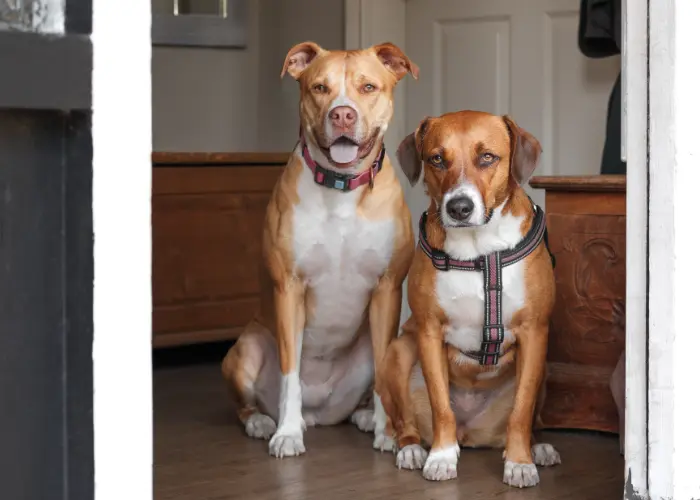
A collar fits around the dog’s neck, while a harness wraps around the chest and shoulders. This difference changes how force is distributed when the leash tightens and can affect comfort, control, and safety.
The right choice depends on your dog’s body shape, temperament, health, and training needs.
How a Dog Collar Works
A dog collar sits around the neck and fastens with a buckle or clip. The leash attaches to a ring on the collar, so any tension is directed at the neck.
Collars are lightweight, simple, and convenient. Most dogs wear one daily because it carries important identification tags and contact details. In fact, in many states, this is a legal requirement.
For dogs that walk calmly on a loose leash, a flat collar may be all you need for short walks or quick trips outdoors. Many owners also prefer collars because they are easy to put on and less bulky than a harness.
However, when a dog pulls, lunges, or suddenly reaches the end of the lead, significant pressure can be placed on the neck and throat. This is why collars may not be ideal for every dog or every situation.
How a Dog Harness Works
A harness fits around the dog’s chest and body rather than the neck. Depending on the design, it may have attachment points on the back, front, or both.
When the dog pulls against the leash, the force is distributed across the chest, shoulders, and ribcage instead of concentrating on the neck. Some harnesses are designed specifically to reduce pulling by gently redirecting the dog’s movement when they surge forward.
It’s important that a harness is fitted correctly to prevent rubbing, restriction of mobility, and uneven force distribution.
Is a harness better than a collar for dogs?
There is no universal answer, because every dog is different. However, for many dogs, a well-fitted harness is the safer and more comfortable option for walks.
When a Harness May Be the Better Choice
A harness is often beneficial if your dog:
- Pulls on the leash: Dogs that constantly pull can place repeated strain on the neck when walked on a collar. A harness spreads pressure more evenly and can make walks more comfortable.
- Has breathing problems: Flat-faced breeds such as Pugs, French Bulldogs, and Bulldogs are already prone to airway difficulties. Additional pressure on the throat from a collar can worsen breathing problems.
- Is small or delicate: Toy and small breeds may be more vulnerable to neck injuries because of their size and delicate trachea.
- Is young: Puppies are still learning lead manners and may move suddenly and unpredictably. Harnesses can offer safer control during training.
- Is anxious or reactive: Some nervous dogs may back out of collars when frightened. A secure harness can reduce the risk of escape.
- Has medical issues: Dogs with a collapsing trachea, neck pain, spinal disease, or eye conditions may benefit from avoiding neck pressure.
Even when dogs walk primarily on a harness, many still wear a collar for identification purposes.
When a Collar May Be Enough
A collar may work well if your dog:
- Walks calmly on a loose lead
- Is fully lead-trained
- Rarely pulls or lunges
- Only needs quick toilet walks
- Is comfortable and healthy with no neck or airway concerns
Dog harness or collar: which is safer?
Safety depends not only on whether you choose a collar or harness, but also on fit, quality, and how the equipment is used. An ill-fitting harness can rub, restrict movement, or allow escape. A poorly fitted collar can also cause discomfort or injury.
That said, harnesses are generally considered safer for dogs that pull or have certain health concerns.
Neck Pressure in Dogs and Why It Matters
The neck contains important structures including:
- The trachea (windpipe)
- Thyroid gland
- Cervical spine
- Blood vessels (including the jugular vein)
- Nerves
Repeated pressure from pulling against a collar may contribute to irritation or injury, particularly in susceptible dogs. Sudden jerking on the leash is another concern. Even a brief sharp correction can place force on delicate neck tissues.
Small breeds such as Yorkshire Terriers and Chihuahuas are especially prone to tracheal collapse, a condition in which the windpipe partially flattens during breathing. Collar pressure can aggravate coughing and airway irritation. Flat-faced breeds are also highly susceptible to increased pressure around the neck, affecting their breathing. Dogs with eye conditions such as glaucoma may also be affected by increased pressure around the neck.
This does not mean collars are inherently harmful, but it does highlight why lead training and proper equipment matter.
Dog Walking Control With a Harness
Many owners find they have better physical control using a harness, especially with larger or stronger dogs. Front-clip harnesses can help redirect forward motion, making it easier to manage pulling without causing discomfort. For some dogs, harnesses can also reduce panic because they feel more secure and supported.
Harnesses also provide more stability when helping dogs:
- In busy environments
- Around traffic
- During training
- After surgery or injury
- Into cars or up stairs
However, remember that a harness does not automatically stop pulling. Training is still essential.
Safest Option for Walking a Dog in Common Scenarios
You may want to switch between a collar and a harness depending on the scenario.
- Short toilet breaks: a quick toilet stop in a quiet area might well be managed with just a collar and leash
- Busy, noisy or strange environments: if you’re visiting a busy dog park, a new area or somewhere with traffic, a harness may be the safest option for maximum control
- Long walks on leash: a correctly fitted harness may be more comfortable to wear for longer walks than a collar alone
Harness or Collar for Puppy, Small Dogs, Large Dogs, & Flat-Faced Breeds
The choice of harness or collar will be influenced by your dog’s age, size, temperament, and health.
Puppies
Puppies benefit from harnesses because they are still learning how to walk on a lead. They are more likely to bounce, pull suddenly, or become distracted.
A soft harness can make early training safer and more comfortable while reducing accidental neck strain. Owners should still spend time teaching loose-leash walking so puppies do not learn to pull continuously against the harness.
Small dogs
Many small breeds are vulnerable to tracheal problems and neck injuries. Harnesses are often recommended for breeds such as Yorkshire Terriers, Chihuahuas, Pomeranians, Maltese, and Toy Poodles.
A lightweight harness can reduce pressure on the throat while still providing control.
Large dogs
Large and powerful dogs may benefit from harnesses because they allow owners to manage movement more effectively.
Front-attachment harnesses can be particularly useful during training. However, fit is extremely important, as poorly fitted harnesses may restrict shoulder movement in active dogs.
For well-trained large dogs that walk calmly, collars may still be appropriate in some situations.
Flat-faced breeds
Flat-faced (brachycephalic) breeds often struggle with narrowed airways and breathing difficulties. Affected breeds include Pugs, French Bulldogs, English Bulldogs, Boston Terriers, and Shih Tzus.
Harnesses are generally the safer option because they avoid direct pressure on the throat and windpipe. For these breeds, comfort during walks can significantly affect breathing effort, especially in warm weather or during exercise.
Elderly dogs
Harnesses with support handles can help dogs with arthritis or mobility problems.
Final Thoughts
The best choice keeps your dog comfortable, safe, and under control while supporting positive training experiences.
For many dogs, especially puppies, pullers, small breeds, and flat-faced breeds, a harness is often the better option for public outings. Collars still have an important role for identification and may be perfectly suitable for calm dogs with good lead manners.
Rather than asking whether harnesses are always better than collars, it is more useful to ask what your individual dog needs. Age, breed, health, behavior, and training level all play a role.
Whichever option you choose, ensuring a proper fit and investing time in reward-based lead training will make the biggest difference for enjoyable, stress-free walks.

About the Author: Dr. Lizzie Youens, BSc (Hons), BVSc, MRCVS, is a veterinarian with academic training in Veterinary Science, Veterinary Medicine, and Animal Behavour & Welfare. She brings more than a decade of experience across diverse veterinary settings, including rural branch practices and large hospital environments. Lizzie resides in the Forest of Dean with her family and two rescue cats.
Related Articles

How Dogs Can Calm Anxiety
A person suffering from anxiety attacks experience many risks, and it’s one of the reasons why it’s prudent to consider having a service dog or emotional support animal as a companion. The animal can keep the environment safer for the individual and below are some of the ways a dogs can calm anxiety: 1) Dogs […]

Read More

Can Cats Be Service Animals?
Having a cat brings the same positive effects as dogs. These pets can be equally beneficial to a person’s health. Experts have proven that cat owners are less likely to have a health emergency, such as a heart attack, with their feline companion around and cats have also been proven to help alleviate sleeping disorders, […]
Read More
How Dogs Stop Panic Attacks
When a panic attack hits, your heart races, chest tightens, and thoughts scramble, leaving you in a vulnerable state. Debilitating panic attacks can qualify as an ADA disability, and a psychiatric service dog can be trained to stop a panic attack by doing the following: • Performing deep pressure therapy that switches your nervous system […]
Read More